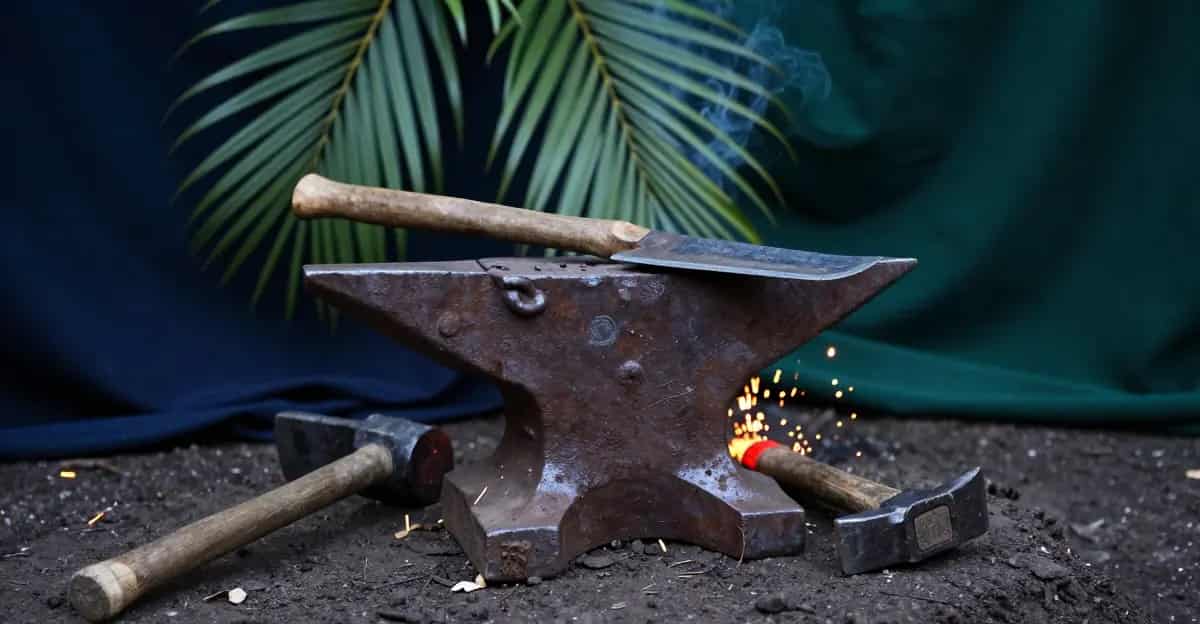
Eshu (Elegua): Orisha of the Paths, Divine Messenger
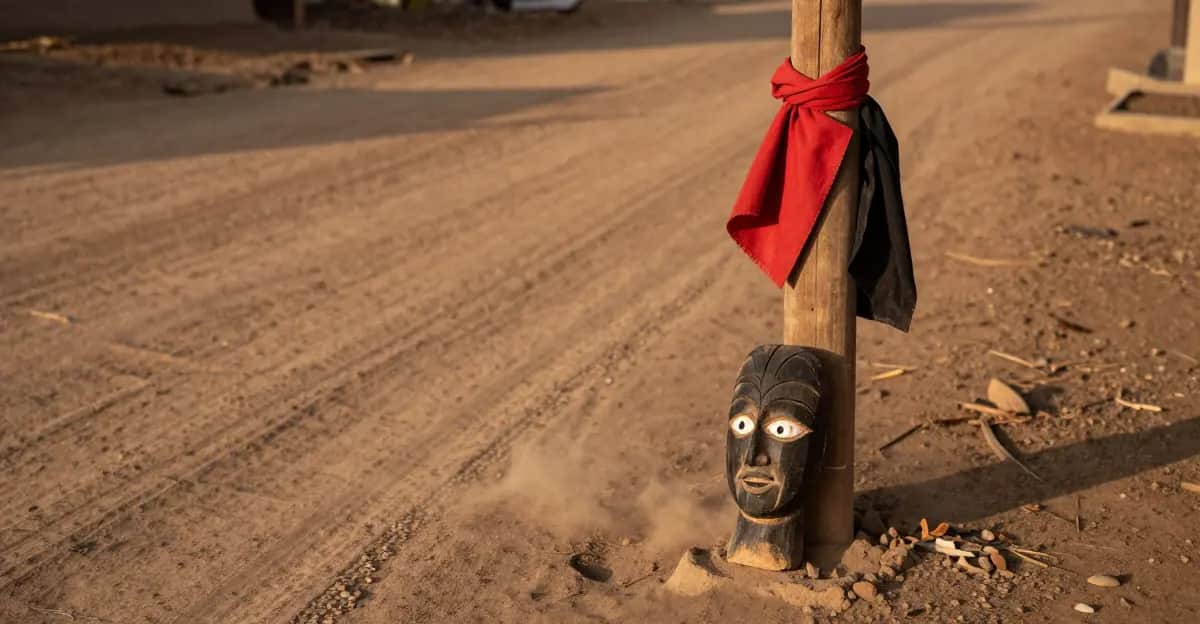
Eshu is, without a doubt, the most fascinating, complex and misunderstood Orisha in the entire African pantheon. To speak of Eshu is to speak of the very breath of life, the energy that makes the universe move. Often feared due to centuries of religious intolerance and colonial distortions, the true essence of Eshu transcends Western notions of "good" and "evil".
In the Ifá tradition and Yoruba philosophy, Eshu is not the devil. He is the divine messenger of Olodumare (the Supreme God), the lord of crossroads, the guardian of free will and the absolute principle of communication and dynamism. Without Eshu, the universe would remain static. Without Eshu, no message reaches the heavens.
For this vital reason, there is an unbreakable law in any African-rooted ritual: Eshu is always the first to be greeted and fed. Laroyê Eshu!
Who is Eshu in Yoruba Philosophy and Ifá?
In Yoruba cosmology, the universe is moved by Àṣẹ (Ase) — the vital force. Eshu is the supreme regulator of that energy. He is the cosmic force that ensures the law of cause and effect is fulfilled.
Eshu is the crossroads itself — not only physical, but mental and spiritual. He is present at the exact moment when you must make a decision. His nature is neutral, like the road itself: the road does not force you to turn left or right, but the consequences of the path you choose will be administered by Eshu.
The Sacred Domains of Eshu
Absolute Communication: Eshu speaks all the languages of humans, spirits and Orishas. He is the "telephone" between Orun (the spiritual world) and Aye (the physical world).
Movement and Transformation: Nothing grows, changes or transforms without his permission.
Guardian of Ebó: When the Ifá Oracle prescribes a sacrifice or offering (Ebó), it is Eshu who transports it and attests before the deities that the debt has been paid, freeing the person from their obstacles.
Order and Chaos: Eshu creates confusion for those who are arrogant and dishonest, but brings order and open roads to those who are upright and humble.
Deconstructing the Myth: Why Eshu is Not the Devil
When European missionaries arrived in West Africa in the 19th century, they encountered a deity associated with sexuality, clay, fire, cunning, and who was greeted first in all rituals. With their dualistic worldview (perfect God vs. evil Devil), they automatically categorized Eshu as the Christian Devil.
This is one of the greatest anthropological fallacies in history. In the Yoruba worldview, absolute evil does not exist as a separate entity. What exists is disequilibrium (Osogbo).
The Christian Devil rebelled against God and seeks the destruction of humanity. Eshu, on the contrary, is the most loyal official of Olodumare (God). He does not try to steal souls; he tests the morality, patience and ethics of human beings. Eshu is the divine inspector.
The Itan (Story): The Hat of Two Colors
Ifá wisdom is transmitted through Itans (mythical stories). The most famous story of Eshu explains his illusory nature and the danger of thinking we own the absolute truth.
Legend tells that two farmers were inseparable friends. They worked in fields side by side and swore they would never argue.
Eshu, perceiving the arrogance of the friends in believing their friendship was perfect and immune to the test of time, decided to walk along the narrow dirt road that separated the two fields. Eshu wore a very peculiar hat: on the right side, the hat was red; on the left side, it was black.
At the end of the day, one of the friends commented: "Did you see that friendly old man with the black hat who passed by today?"
The other replied: "Yes, I saw him, but the hat was red."
The discussion quickly escalated. The two friends ended up fighting physically, destroying the fields and a lifetime of friendship. Eshu then appeared, removed the hat and showed both sides. The friends realized their mistake: both were right in what they saw, but they were wrong in thinking their perspective was the only existing truth.
Eshu laughed, teaching them that truth always has more than one side.
Eshu Across Cultures: Nigeria, Cuba and Brazil
As the African diaspora spread throughout the world, the energy of Eshu traveled and adapted to new realities.
1. In Nigeria — Yoruba Tradition and Isese L'Agbaye
In his homeland, he is known as Èṣù Odara or Èṣù Laalu. In Africa, Eshu is strictly a deity of great power, an Irunmole (primordial Orisha) who participated in the creation of the world alongside Orunmila (the Orisha of wisdom). He is worshipped individually, has his own priests and open-air sanctuaries, often represented by laterite stones stuck in the ground.
2. In Cuba — Santería / Regla de Ocha
When the tradition arrived in Cuba, it fused with Catholicism to survive, giving birth to Santería. Here, Eshu is better known as Elegguá (or Eleguá).
Elegguá is the absolute owner of the keys of destiny, responsible for opening and closing the doors of life. In Cuba, receiving Elegguá is the first and most important step (the "Warriors") for anyone entering the religion. He is symbolized by a cement head with cowrie-shell eyes and mouth, kept behind the main door of the house for protection.
3. In Brazil — Candomblé and Umbanda
In Brazil, the figure of Exu gained a unique complexity, branching into two distinct understandings:
In Candomblé (Exu Orisha): Maintains the essence closest to Africa. He is the primordial Orisha of movement, the Bará (owner of the body). He is revered in the great settlements in the temples, receiving offerings (dendê oil Padê, honey and cachaça) before any festivity.
In Umbanda — The Exu Entities: Umbanda created a vital distinction. Besides the Orisha Exu, there is the Povo de Rua (Street People) — spirits of human beings who have lived and evolved. These are the "Exus de Trabalho" (such as Exu Tranca Ruas, Exu Caveira, Zé Pelintra) and their female counterparts, the Pombagiras (such as Maria Padilha, Rosa Caveira).
The Sacred Attributes and Symbols of Eshu
Greeting: Laroyê Eshu! Eshu é Mojubá!
Colors: Red and Black (Africa and Candomblé) — Red and Black or White and Black (Cuba)
Main Symbol: The Ogó, a staff with carved gourds, representing his authority and his ability to travel through space and time.
Offerings (Adimús): Dendê oil, cassava flour (Padê), gin or cachaça, Guinea pepper (Atare), roasted yam and honey.
Day of the Week: Monday — to ensure open roads and opportunities during the week.
The Sacred Oriki of Eshu — The Invocation
The Oriki is a sacred poetic greeting recited to awaken the energy of Eshu, ask for his protection and ensure that he opens the roads instead of creating obstacles. It is almost like a spoken poem, charged with Àṣẹ.
In Yoruba
Èṣù Ọ̀dàrà, Èṣù Lálú ogiri òkò. Ọkùnrin orí ìtá, A jí lé lógùn èrú. Má fi mi ṣeré o! Jẹ kí nri ire gbà o. Àṣẹ!
Translation to English
Eshu Odara — He who works wonders and brings goodness, Eshu Lalu, strong as a stone wall. The man who lives at the crossroads, He who wakes up and carries two hundred loads. Do not make me your toy! — Do not play with my destiny. Let me receive good blessings. Ase!
How it is used in practice: This Oriki is recited early in the morning or before starting a consultation with the Ifá Oracle. Often, the practitioner pours a little fresh water (Omi tutu) or gin at the entrance of the door or in the street as an offering before reciting.
The Traditional Song — Orin Èṣù
In African and Afro-Brazilian tradition, music is the primordial form of moving Àṣẹ (Ase/Vital Energy). This is one of the oldest and most respected songs to greet Eshu as the owner of the roads — Lóònà.
The Song — Call and Response
| Role | Lyrics |
|---|---|
| Lead (who calls) | Bara ó bébe tirí rí, Lóònà! |
| Chorus (everyone responds) | Èṣù tirí rí, Bara ó bébe tirí rí, Lóònà! |
Meaning of each sacred word
Bara — One of Eshu's titles. It means "The Lord of the Body" — the vital principle that dwells within every human being.
Bébe — To work wonders, to perform grandiose feats.
Tirí rí — Sacred onomatopoeia representing something grandiose, formidable and infinite. The sound itself carries energy.
Lóònà — "On the road" — a direct reference to his domain as Owner of the Roads.
Poetic Translation
"The Lord of the Body — Eshu — works wonders on our roads! Eshu is formidable. The Lord of the Body works wonders on our roads!"
Note: This song is performed in a call and response format, an African musical pattern that stimulates collective participation and amplifies the group's Àṣẹ.
Eshu in the Ifá Oracle System
At the heart of the study of the 256 Odus of Ifá, Eshu is present in all of them. Orunmila knows destiny, but Eshu is the one who executes it.
In the Odus where Eshu speaks loudly, the message is almost always an "awakening". He warns of imminent crossroads and demands that the person improve their way of communicating, abandon stubbornness and, above all, have the courage to make a decision.
A path ruled by Eshu warns: you cannot stand still in the middle of the road — stagnation is the only true enemy of Eshu.
How to Honor the Energy of Eshu in Daily Life
You do not need to be an initiate to respect the principle of Eshu. Honoring this vital force means honoring your own choices.
Whenever you leave home, remember the crossroads. Face changes not with fear, but as opportunities sent by the divine messenger. Practice clarity in your communication and be grateful for doors that close — often, it is Exu protecting you from a path of suffering in order to redirect you to your true destiny.
Laroyê Eshu! May your paths always be open to prosperity, love and wisdom.
What you have read here is rooted in the 256 Odus of Ifá — the corpus we study verse by verse. Read them as contemplation: real divination belongs at the table of a consecrated babalawo.
Sources consulted
- Mitologia dos Orixás — Reginaldo Prandi
- Orixás — Pierre Fatumbi Verger, pp. 36–40
Written by
- Pablo de Lima (Awofakan)
- Thaiana de Lima (Ikofá)
A couple initiated in Ifá in the Cuban lineage — Regla de Ocha / Ifá.
Meet the authors →Last reviewed:
Get the wisdom in your inbox
One new article a week on Orishas, Odus and Yoruba philosophy. No spam.
Unsubscribe anytime, one click from any email.
Comments
Loading comments...
You need to sign in to comment.