Ebó: What Offerings Are and How They Restore Balance
In Ifá, Candomblé and Santería, the concept of ẹbọ appears with a frequency that can confuse those who are just beginning. We hear about offerings to Eshu, animal sacrifices, food left at crossroads, objects buried in the earth. But what unites all these acts? Why does the Yoruba tradition insist so much on ẹbọ as a central part of the relationship with the sacred?
The short answer is: ẹbọ is not just a gift. It is restitution.
In this text, we explain the logic of ẹbọ — what it is, how it works, and why only a consecrated priest — the babalawo in Ifá, the ialorixá or babalorixá in Candomblé and in Regla de Ocha — can prescribe the correct ẹbọ for each situation. We will not prescribe any ẹbọ here: that belongs at the priest's table, not in an article.
What is ẹbọ
The word ẹbọ (or ebó, in the Cuban Lucumí spelling) comes from Yoruba and is usually translated as "offering" or "sacrifice." In this text we read the word as "that which is given to restore" — a reading, not an etymology. And the translation is incomplete. In the Yoruba tradition, ẹbọ is not a gift of gratitude — although gratitude may accompany it. It is, above all, an act of restoring balance.
Yoruba cosmology starts from the principle that the world functions through interdependence. Human beings, Orishas, ancestors, nature and personal destiny (the Orí) are in constant exchange. When this exchange becomes unbalanced — by action, omission, destiny or chance —, ẹbọ is the mechanism by which balance is re-established.
Think of ẹbọ as the payment of a cosmic debt that you did not necessarily incur on purpose. Destiny may demand an ẹbọ even before birth; life may demand an ẹbọ after a bad choice; and chance may demand an ẹbọ simply because the world is that way. Ẹbọ is not punishment — it is trajectory correction.
The logic of balance
The Ifá system — which shares the same cosmology with Candomblé and Santería — operates with a sophisticated idea of causality. Each person's destiny (the Àyànmọ́) is traced before birth, but it is not rigid. What is traced is a field of possibilities: some paths are easier, others more difficult, and some are blocked until a condition is met.
Ẹbọ is one of those conditions.
When a babalawo consults Ifá for someone, the Odu that comes out is not just a "message." It is a diagnosis of the person's current state in relation to their destiny. And almost always — not always, but almost —, the Odu points to an imbalance and prescribes an ẹbọ to correct it.
This imbalance can be of several types:
- Physical: health is compromised because the body has lost alignment with the Orí.
- Social: relationships are broken because there was offense to an Orisha or an ancestor.
- Material: prosperity is blocked because the path of destiny requires a symbolic action to be unlocked.
- Spiritual: the person is disconnected from their own spiritual head (Orí) and needs an act of reconnection.
Ẹbọ acts on all these levels at the same time, because in the Yoruba tradition they are not separated. The body, the community, nature and the spirit are a single system.
What can be ẹbọ
Here we enter delicate territory. The Yoruba tradition recognizes countless forms of ẹbọ, and each one has a specific context. What follows is a general ethnographic description, not a list to be followed:
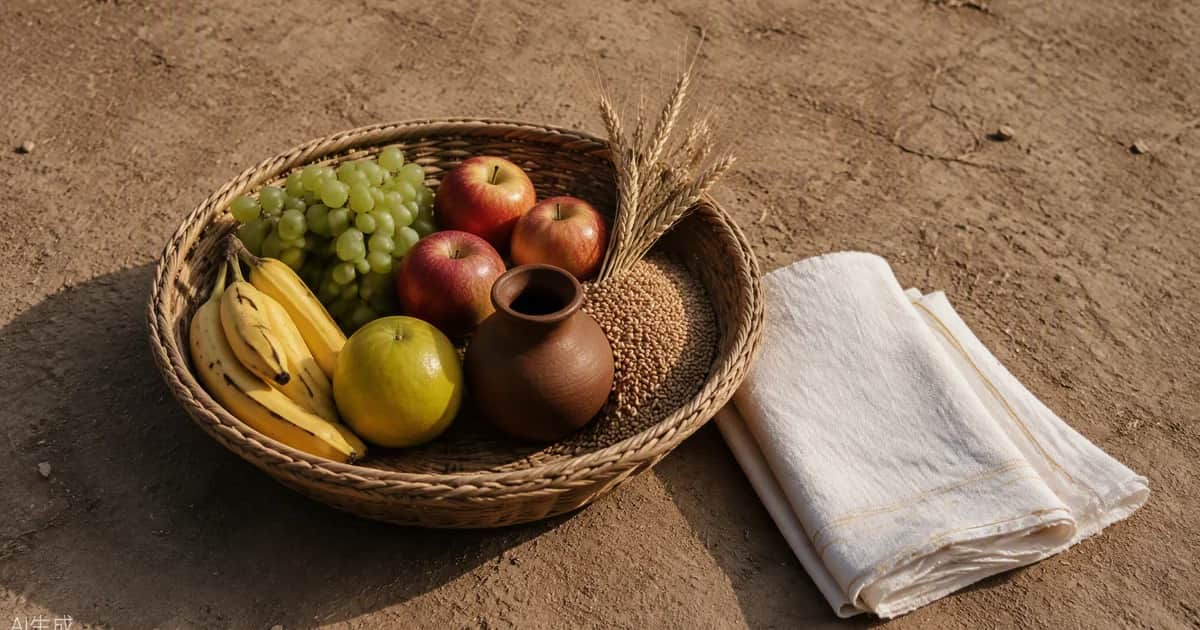
- Foods: fruits, grains, palm oil, honey, olive oil. Each food carries specific symbolism: honey sweetens the path, palm oil nourishes, cassava flour (farinha d'água) sustains.
- Animals: in some ceremonial contexts, animals such as chickens, pigeons, rams or fish are used as ẹbọ. The type of animal, color, age and preparation method are all determined by the Odu and the babalawo.
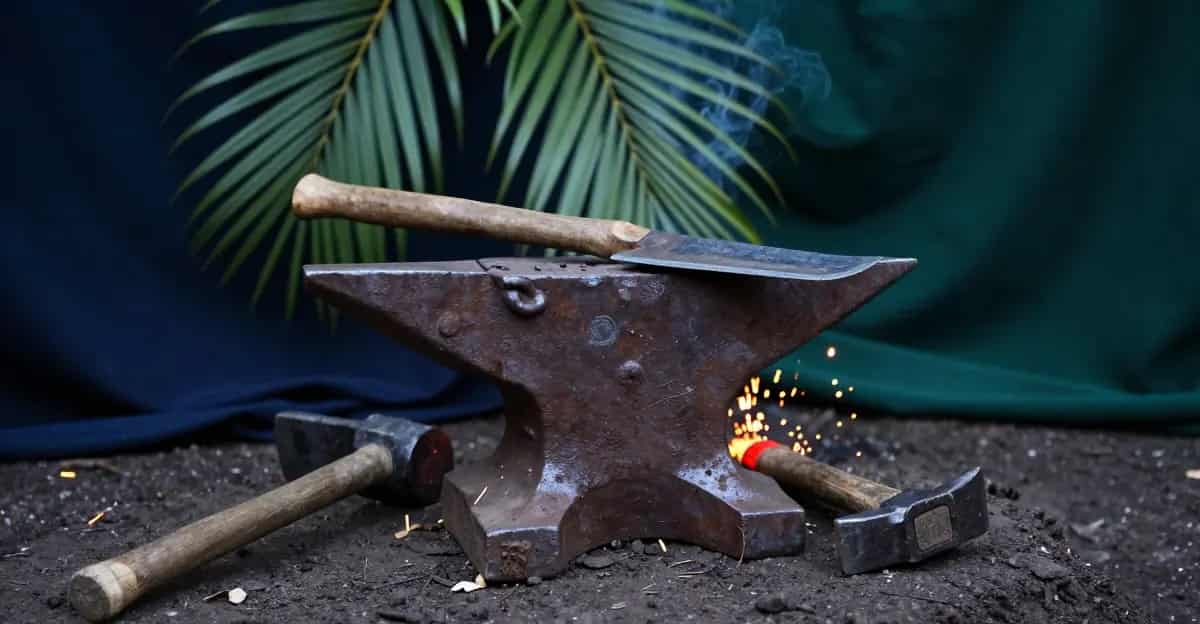
- Objects: clothes, beads, coins, tools, household utensils. An ẹbọ may require a white shirt, a specific bead necklace, or an amount of money to be donated.
- Actions: ẹbọ is not always material. It can be a fast, a walk, a herbal bath, a visit to a sacred place, or an act of charity. The "sacrifice" can be the sacrifice of ego, habit, or fear.
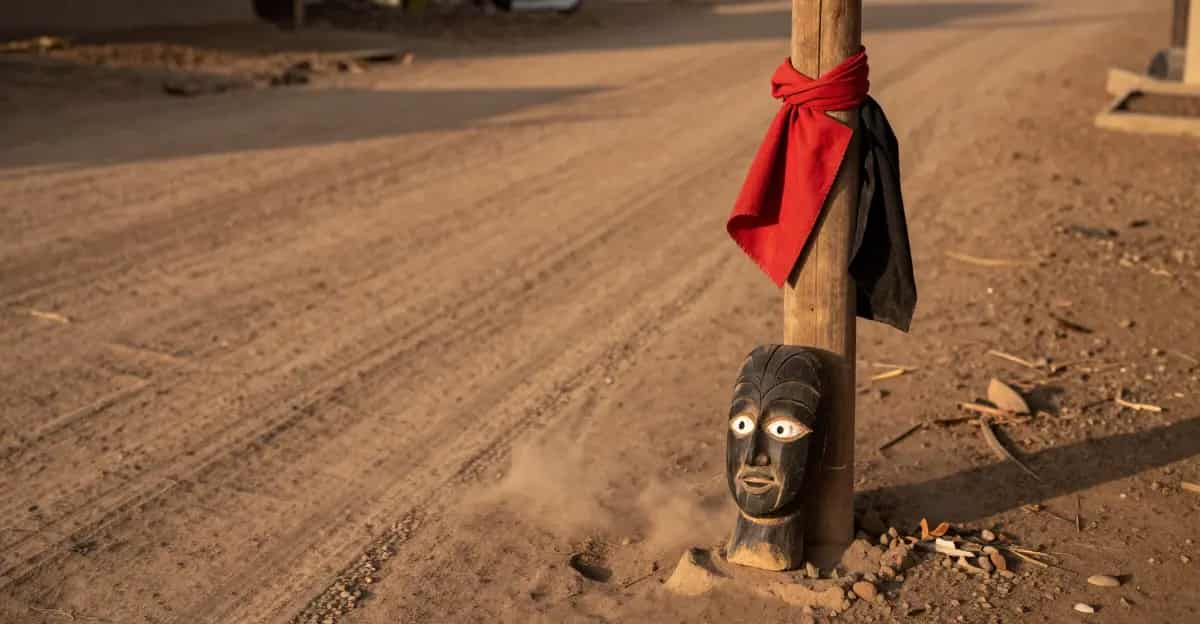
- Street ebós: offerings left at crossroads, riverbanks, beaches, or tree bases. These ẹbọs are generally directed to Exu/Eleguá, the messenger who carries the offerings to the right destination.
There is only one rule: ẹbọ is prescribed by the priest, never chosen by the devotee. There is no "doing an ebó on your own" in classical Yoruba tradition. What exists is personal devotion — lighting a candle, offering flowers, praying —, which is valid, but is not ẹbọ. Ẹbọ is a therapeutic act, not a devotional one.
Who prescribes ẹbọ
This is a point that Ifá Wisdom will never tire of repeating: the prescription of ẹbọ is a priestly office — and the instrument changes with the tradition.
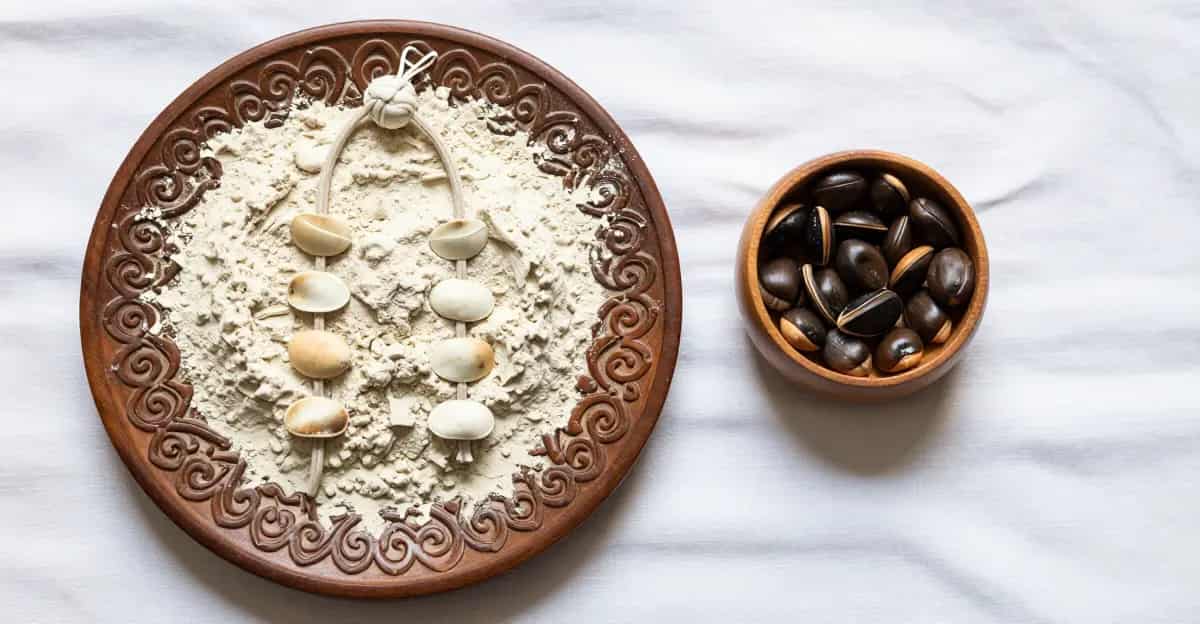
In Ifá, the one who prescribes is the babalawo. He does not "guess" the ẹbọ: he consults the Odu — casting the Opele on the opón with iyerosun — and the Odu indicates what is needed. In Candomblé and in Regla de Ocha, the one who prescribes is the ialorixá or the babalorixá, through the merindilogun, the cowrie-shell oracle, which is the oracle of the Orishas. They are distinct offices, with distinct instruments — not versions of the same priesthood. What they share is the method: interpret the oracle, consider the person's context, and only then prescribe. The process is diagnostic, not intuitive.
This means that:
- No book can replace consultation with a priest.
- No website — not even this one — can prescribe ẹbọ for a specific situation.
- No friend, relative or internet "expert" has authority to say "do such ebó" without the office that authorizes it.
The Yoruba tradition is democratic in access to knowledge, but it is hierarchical in ceremonial practice. Ẹbọ is the frontier where knowledge becomes action — and this frontier is guarded by the priesthood.
Ebó and everyday life
If ẹbọ is a ceremonial act, how does it relate to the life of someone who is not in a temple every day? The answer lies in the ethics of balance.
Ẹbọ teaches that the world is not linear — it is cyclical. What is taken must be returned. What is broken must be fixed. What is used must be renewed. This logic applies to:
- The relationship with nature: when we harvest, we offer something back — gratitude, care, sustainability.
- The relationship with others: when we hurt, we repair — not with words, but with acts.
- The relationship with oneself: when we neglect the body or spirit, we re-establish balance with rest, nutrition, meditation, or seeking help.
Ẹbọ, in its broadest sense, is the practice of not letting debts accumulate — neither with the gods, nor with humans, nor with oneself.
What this text does not do
This article explains ẹbọ as a concept and as a practice of the Yoruba tradition. What it does not do:
- Prescribe ẹbọ for any specific situation.
- Replace consultation with a consecrated priest.
- Teach the preparation of ceremonial ẹbọ.
- Promise results of any kind (healing, prosperity, love).
If you feel that you need an ẹbọ, there is only one path: seek a trusted babalawo (through the Ifá oracle) or ialorixá or babalorixá (through the cowrie-shell oracle) and have a consultation. The oracle will say what is necessary — and only the oracle has the authority to do so.
What you have read here is rooted in the 256 Odus of Ifá — the corpus we study verse by verse. Read them as contemplation: real divination belongs at the table of a consecrated babalawo.
Sources consulted
- Ifa Divination — William Bascom, pp. 60–68
Written by
- Pablo de Lima (Awofakan)
- Thaiana de Lima (Ikofá)
A couple initiated in Ifá in the Cuban lineage — Regla de Ocha / Ifá.
Meet the authors →Last reviewed:
Get the wisdom in your inbox
One new article a week on Orishas, Odus and Yoruba philosophy. No spam.
Unsubscribe anytime, one click from any email.
Comments
Loading comments...
You need to sign in to comment.