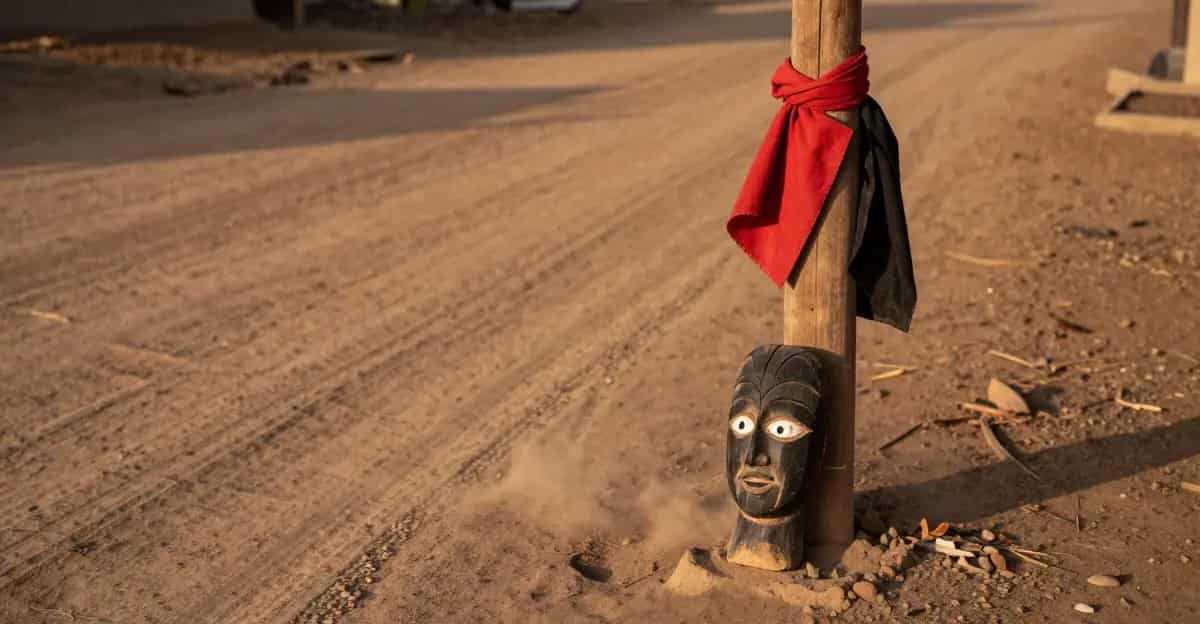
Obaluaye (Babalú Ayé): Orisha of Healing and Disease
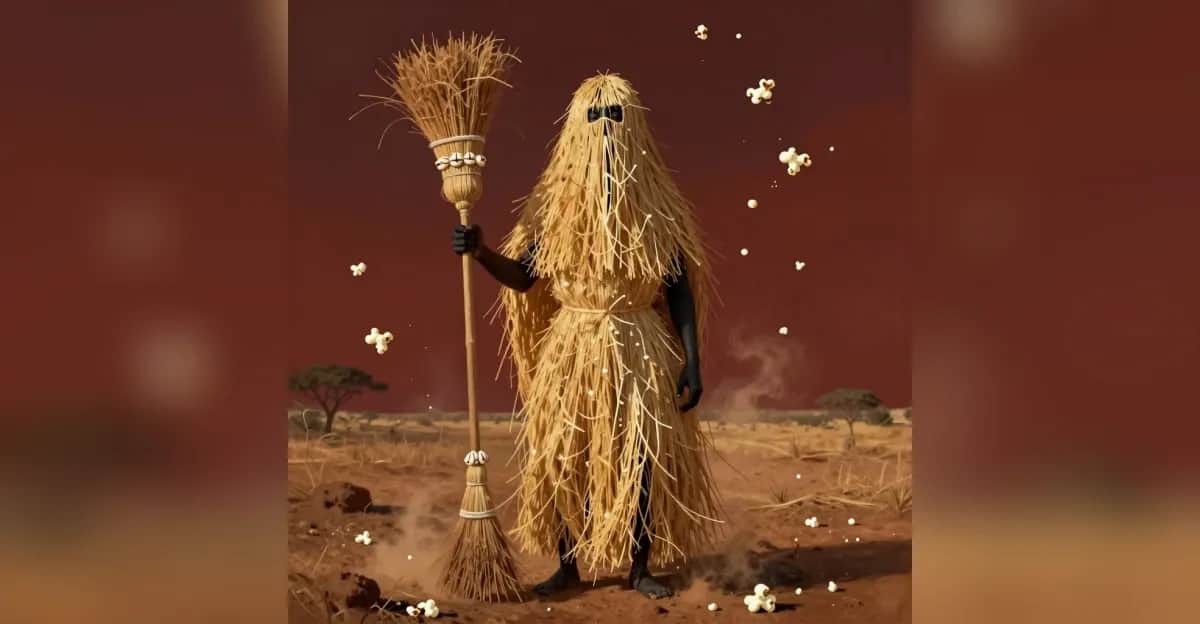
Atotô! When this greeting is spoken, silence falls. Atotô is the call for reverent respect before Obaluaye — the Orisha who carries both disease and cure, death and life, fear and consolation. No other Orisha inspires such a mixture of dread and devotion. Obaluaye is the physician of the poor, the lord of the earth, the one who covers his face with straw because his countenance is too vast — too beautiful and too terrible — to be seen by human eyes.
Obaluaye (also called Omolu, Xapanã, or Sakpata) is the Orisha of disease and healing. This dual nature is not a contradiction — it is his essence. Whoever has the power to cause illness also has the power to cure it. Whoever governs death equally governs the passage into life. Obaluaye is the perfect balance between the two sides of existence.
Who Is Obaluaye / Omolu
There is a subtle distinction worth knowing. In many traditions, Omolu is the name of the Orisha when he manifests as the wise elder, the old man covered in straw who walks hunched over, carrying the weight of the world's suffering. Obaluaye — whose name literally means "King, Lord of the Earth" (Oba-Olu-Ayé) — is the more youthful, vigorous manifestation, the lord who reigns over the ground we walk upon. In practice, the two names are often used interchangeably for the same deity.
His traditional name in Africa is Sakpata (among the Fon of Benin) or Xapanã/Sopona (among the Yoruba). So feared was his power over epidemics — especially smallpox — that in many regions speaking his true name was forbidden. He was called by respectful euphemisms: "the Lord," "the Hot King," "He of whom one does not speak." The fear was so great that, during smallpox outbreaks, the priests of Sopona were simultaneously revered and feared, for it was believed they controlled the disease.
The Myth of Abandonment: Son of Nana Buruku, Raised by Yemoja
The most moving story of Obaluaye is that of his birth and abandonment — a narrative directly connected to Nana Buruku, the oldest Orisha, and to Yemoja, the queen of the sea:
Nana Buruku, the lady of primordial clay, gave birth to a son. But the boy was born with his body covered in sores and wounds — marks of smallpox. Ashamed and frightened by the child's appearance, Nana Buruku abandoned him at the seashore, leaving him at the mercy of the waves.
The crabs of the beach advanced and wounded his body further, leaving deep scars on his skin. The boy wept alone on the sand, injured and forsaken.
It was then that Yemoja, the mother of all, found him. Moved with compassion, she gathered up the child, tended his wounds, and raised him as if he were her own son. Yemoja taught him the secrets of leaves, herbs, and healing. And the wounded boy became the greatest of healers.
To hide the scars that covered his body, Obaluaye took to dressing in coastal straw (azé), covering himself from head to toe. And he carried within himself forever this truth: the one who suffered most is the one who knows best how to heal.
This myth is profoundly human. It teaches that the wound is the source of the cure — that those who have known pain are the ones who best know how to relieve it. Obaluaye is not a distant, immaculate healer: he is the wounded healer, the physician who bears on his own body the marks of all that he cures in others.
Sacred Attributes
Everything about Obaluaye speaks of earth, transformation, and the border between life and death:
- Colors: black and brown — those of the two necklaces Verger records, the lagidiba of tiny black discs and the brown beads with black stripes (Orixás, p. 80). White comes by way of the straw and the popcorn; red is a house variation, and is not in our sources
- Main symbol: the xaxará (or ilesin) — a scepter/broom made of palm ribs, cowrie shells, and beads, used to "sweep away" diseases and purify spaces
- Garment: the azé — the coastal straw clothing that covers him entirely
- Votive food: sacred popcorn (dobórú) — popped in sand, without oil — symbolizing wounds that become white flowers. Aberém is not popcorn: it is the steamed white-corn cake wrapped in banana leaf, the same one offered to Nana Buruku. And abadô (toasted corn)
- Day of the week: Monday
- Elements: earth, dust, the cemetery, straw
- Number: 13
- Greeting: Atotô! (silence, absolute respect)
Popcorn is perhaps the most beautiful symbol of Obaluaye: the hard, closed kernel, when subjected to heat (to suffering), explodes and transforms into something white, light, and open. It is the perfect metaphor for healing — disease and pain, when passed through, transform into wisdom and renewal.
The Lord of the Earth
While other Orishas govern the waters, the winds, or fire, Obaluaye governs the earth — not the fertile soil of planting, but the deep earth, the earth of the ground we walk on and the earth that receives the dead. He is the lord of the cemetery, the guardian of the border between the world of the living (Ayé) and the world of the dead.
This connection with earth and death does not make him grim — it makes him essential. Obaluaye is the Orisha who reminds us of our mortality and, precisely for that reason, of the value of life and health. He walks hunched over not from weakness, but because he carries the weight of all the world's pain, and still continues to offer the cure.
Syncretism: Saint Lazarus and Saint Roch
In Brazil, during the period of enslavement, Africans concealed the worship of Orishas behind Catholic saints. Obaluaye was syncretized with two saints associated with disease:
- Saint Lazarus — the beggar covered in sores from the biblical parable, accompanied by dogs that licked his wounds. The image of Saint Lazarus, his body marked with sores, resonated perfectly with Obaluaye, the wounded healer. Saint Lazarus's day (and Obaluaye's) is celebrated on December 17 with great devotion, especially in Bahia.
- Saint Roch — the pilgrim saint who cared for plague victims and who himself fell ill, being healed by a dog that brought him bread. In some regions, Obaluaye is associated with Saint Roch, celebrated on August 16.
In both cases, the link is clear: saints who knew disease in their own flesh and who became protectors of the sick. The syncretism was not random — Africans chose saints whose stories mirrored the essence of their Orishas.
Obaluaye in Nigeria, Benin, and the Americas
In Nigeria and Benin, the cult of Sakpata/Sopona was one of the most powerful and feared. His priests formed one of the most influential religious societies, precisely because of the power attributed to the deity over epidemics. With British colonization, the cult was even banned in the early 20th century, under the claim that the priests deliberately spread smallpox — a controversial accusation that reflects colonial fear in the face of African spiritual power.
In Cuba, in Santería, Obaluaye is known as Babalú-Ayé, one of the most popular and beloved deities on the island. But the Lucumí name is not the only one: this deity's most respected consecration in Cuba comes down the Arará line, Dahomean in root, where he is called Asojano (or Azojuano) and carries the title Oluo Popo, king of Popo. Babalú-Ayé is syncretized with Saint Lazarus, and his feast, on December 17, draws thousands of devotees to the sanctuary of El Rincón, many fulfilling promises and walking on their knees. The song "Babalú," popularized internationally, is an invocation to this Orisha.
In Brazil, Obaluaye/Omolu is central to both Candomblé and Umbanda. In Candomblé, his festivals (the olubajés) are sacred banquets where the Orisha's food is served to all present, in a gesture of sharing and collective healing. In Umbanda, Omolu is revered as lord of souls and of healing.
Obaluaye and Pandemics: Contemporary Relevance
Few Orishas have become as painfully current as Obaluaye. In an era marked by global pandemics, the Orisha of epidemics has returned to the center of spiritual attention. For practitioners of African-rooted religions, the pandemic was understood through the lens of Obaluaye: a time of trial, of collective transformation, in which humanity was forced to confront its own fragility.
But Obaluaye's message is never one of despair. He is the Orisha who shows that disease and cure walk together — that even at the height of suffering there is the seed of renewal. The popcorn that bursts, the wound that heals, the winter that precedes the spring. Obaluaye teaches that passing through pain, rather than avoiding it, is the path of true healing.
How to Honor Obaluaye
You don't need to be initiated to respect and honor Obaluaye. Here are universal ways:
- Care for your health with gratitude. Obaluaye is the lord of the body and of healing. Caring for your own body — resting, eating well, treating illness — is a way to honor him. Health is a gift, not a guaranteed right.
- Respect the sick and the most vulnerable. Obaluaye is the physician of the poor, the protector of those who suffer. Visiting a sick person, helping someone who is frail, having compassion for the vulnerable — all of this resonates with his energy.
- Offer popcorn. A simple and traditional gesture. Popping popcorn (without salt) and offering it with respect is a popular way to honor Obaluaye, recalling the transformation of pain into lightness.
- Connect with the earth. Walk barefoot, plant something, put your hands on the ground. Obaluaye is the lord of the earth, and contact with the soil is a way to honor that connection.
- Accept the cycles of disease and healing. When you are ill, instead of merely fighting the sickness, ask what it has to teach. Obaluaye invites you to pass through pain with awareness, knowing that it is fleeting and transformative.
- Practice reverent silence. Atotô. Before the mystery of life and death, of disease and cure, sometimes the greatest wisdom is respectful silence.
"He who covers his face with straw hides no ugliness — he hides a light too great. Obaluaye carries on his body all the wounds of the world, and even so offers the cure. The wounded healer is the greatest of healers."
Atotô, Obaluaye! May the Lord of the Earth keep all illness away from you, may he transform your wounds into white flowers like popcorn, and may he grant you the wisdom to know that pain passed through with awareness is the seed of the cure.
What you have read here is rooted in the 256 Odus of Ifá — the corpus we study verse by verse. Read them as contemplation: real divination belongs at the table of a consecrated babalawo.
Sources consulted
- Orixás — Pierre Fatumbi Verger, p. 80
Written by
- Pablo de Lima (Awofakan)
- Thaiana de Lima (Ikofá)
A couple initiated in Ifá in the Cuban lineage — Regla de Ocha / Ifá.
Meet the authors →Last reviewed:
Get the wisdom in your inbox
One new article a week on Orishas, Odus and Yoruba philosophy. No spam.
Unsubscribe anytime, one click from any email.
Comments
Loading comments...
You need to sign in to comment.