Birth Odu: What It Is, According to the Sources
The birth Odu is one of the most quoted — and most misunderstood — ideas in talk about Ifá. This text brings together what the works we use say about it, with work and page, and states plainly what they do not say. It is study, not consultation.
What the birth Odu is
Pierre Verger writes that every individual is born linked to one of the 256 odù of Ifá and that, when a child is born, the parents ask the babalawo to indicate which odù the child is linked to (Verger, Orixás, p. 56 of the PDF). According to him, the odù makes known the person's deep identity, serves as a guide in life, reveals the particular Orisha to whom the person may eventually be dedicated, besides the family's, and gives other indications to help the person conduct themselves with confidence (p. 56 of the PDF).
Wande Abímbọ́lá gives the reason: the Yoruba believe that Ifá witnessed each person's choice of destiny, and so they consult him at the birth of a child, at marriage, at the installation of a chief and at death (Abímbọ́lá, Sixteen Great Poems of Ifá, p. 4). Since Ifá is held to be the only witness of that choice, consulting him is a way of finding out what one's own orí has kept in store; divination is understood as the communication of the wishes of one's orí to Ifá (p. 33).
Who indicates the Odu
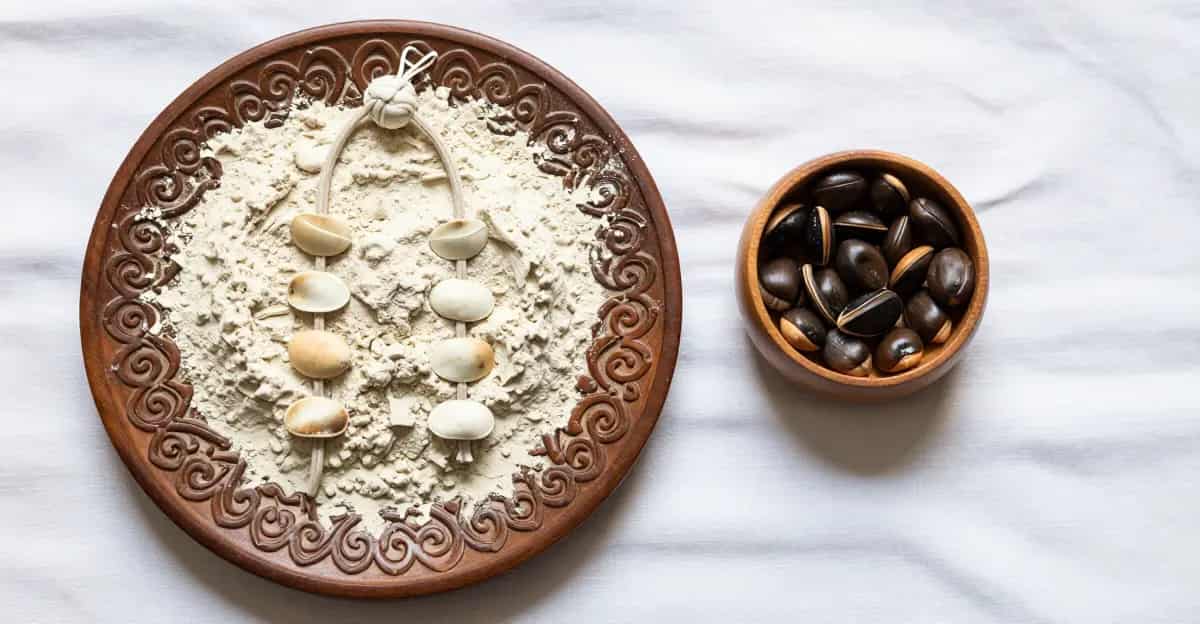
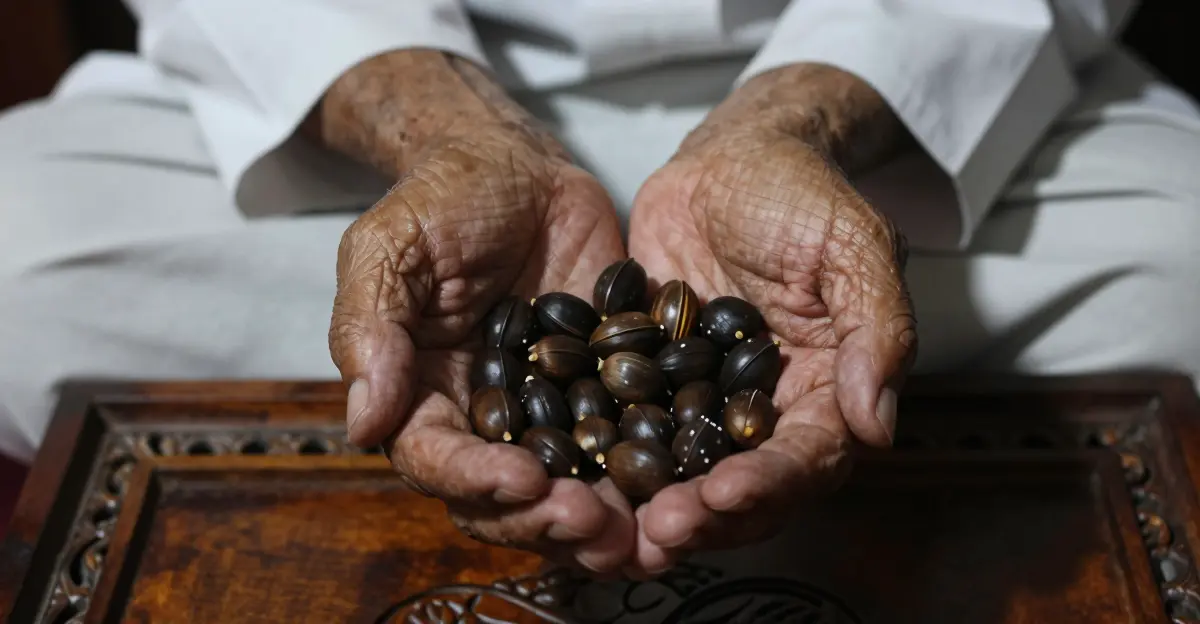
In both works, the one who arrives at the odù is the babalawo. Verger describes the two instruments he uses: the sixteen ikin, handled according to rules, and the opele, a simpler chain with eight half-seeds (Verger, p. 56 of the PDF). José Beniste, introducing Orunmila, says that he knows the prohibitions (ewo), decides the offerings and sacrifices, and reveals the characteristics of destinies, the odù, and each person's personal orisha (Beniste, Jogo de Búzios, p. 22).
It is the craft of a priest trained over many years: Abímbọ́lá records that the apprentice learns at least sixteen verses of each of the 256 Odus by heart before presenting himself for initiation, and that the training takes ten to twenty years (Abímbọ́lá, pp. 10–11).
Itefá and the Hand of Orula
In Beniste's dictionary, tẹfá means to be initiated into the cult of Ifá (Beniste, Dicionário Yorubá-Português, p. 753). The works we use do not describe this rite in detail — its length, its stages or what is determined in it — so we do not describe it here.
In Cuba, David H. Brown describes the Hand of Orula (mano de Orula): a necklace and a bracelet of green and yellow beads and a set of consecrated ikin, received from the babalawo; for men it is called awofacá, for women kofá or ikofafún, and it is usually received long before any initiation (Brown, Santería Enthroned, pp. 152 and 346, note 130).
About this rite in Brazil, we found no source in the works we use.
It is not calculated from a date
Beniste records that some people look for the odù by adding up the digits of a birth date, and calls this system a non-traditional form (Beniste, Jogo de Búzios, p. 189). None of the works we use describes the birth Odu as something that is calculated: in Verger and in Abímbọ́lá, it is indicated by the babalawo, in the consultation of Ifá.
Birth Odu, consultation Odu and Odu of the Day
- Birth Odu: linked to the person from birth and indicated by the babalawo (Verger, p. 56 of the PDF).
- Odu of a consultation: Orunmila is also consulted before an important decision — a journey, a marriage, a purchase or sale — or to find the cause of an illness (Verger, p. 56 of the PDF); the odù that comes out speaks to that situation.
- This site's Odu of the Day: a deterministic rotation, the same sign for everyone. It was not cast for you and says nothing about your destiny.
What this site does
Ifá Wisdom studies the Odus. It does not indicate anyone's Odu and never asks you to tell it yours. The study tool is an artificial intelligence that helps you read the Odus; it has no ase and does not divine. Anyone who wants to know their own Odu goes to a babalawo.
What you have read here is rooted in the 256 Odus of Ifá — the corpus we study verse by verse. Read them as contemplation: real divination belongs at the table of a consecrated babalawo.
Sources consulted
- Orixás — Pierre Fatumbi Verger, p. 56 of the PDF
- Sixteen Great Poems of Ifá — Wándé Abímbọ́lá, pp. 4, 10–11, 33
- Jogo de Búzios — José Beniste, pp. 22, 189
- Dicionário Yorubá-Português — José Beniste, p. 753
- Santería Enthroned — David H. Brown, pp. 152, 346
Written by
- Pablo de Lima (Awofakan)
- Thaiana de Lima (Ikofá)
A couple initiated in Ifá in the Cuban lineage — Regla de Ocha / Ifá.
Meet the authors →Last reviewed:
Get the wisdom in your inbox
One new article a week on Orishas, Odus and Yoruba philosophy. No spam.
Unsubscribe anytime, one click from any email.
Comments
Loading comments...
You need to sign in to comment.