Reading an Odu with Responsibility

The Ethics of Ifá Consultation
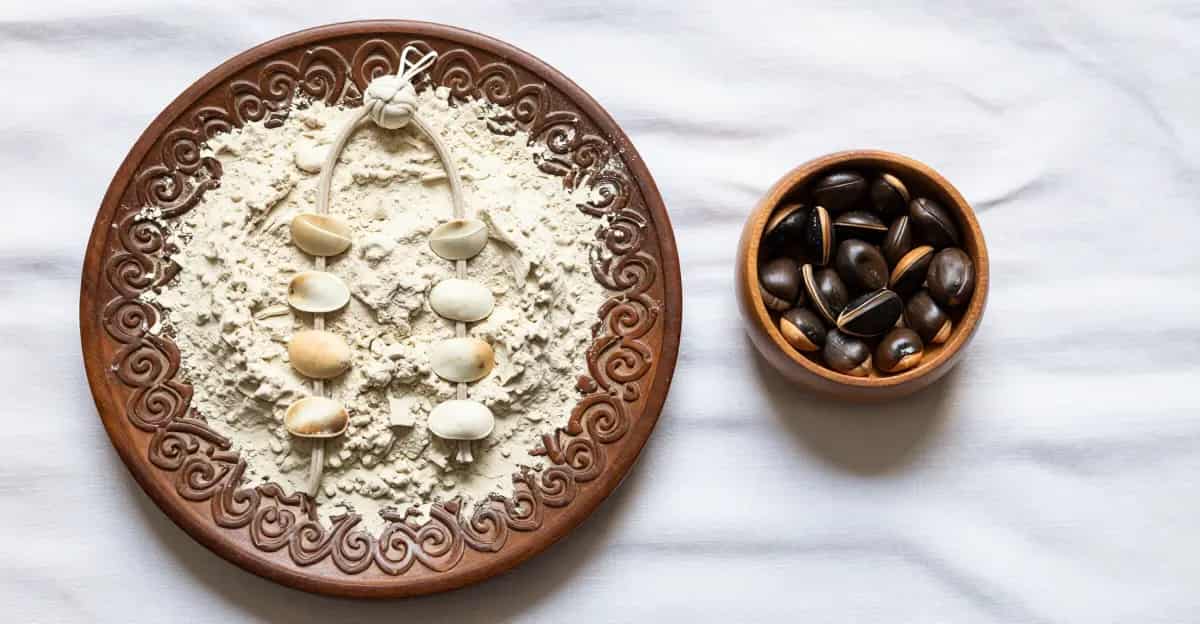
An Ifá consultation is much more than a simple act of "asking and receiving answers." At the babalawo's table it is a sacred encounter between the consultant, the priest and the spiritual forces that govern the universe. In digital study there is no such encounter: there is the text of the Odu and your reflection on it — which is a great deal, and is something else. For this exchange to be truly beneficial, it is essential to approach it with responsibility, ethics, and authenticity.
On this platform, we treat Ifá as philosophy and life guidance. AI helps articulate syntheses and paths — but the final decision, and responsibility for that decision, are always yours.
The Importance of Honest Context
When you consult Ifá, you are essentially asking: "What does ancestral wisdom have to say about my current situation?" But for the answer to be relevant, the question must be formulated honestly.
Avoid:
- Hiding crucial context information
- Formulating questions to get the answer you want to hear
- Consulting Ifá to confirm decisions already made, instead of seeking genuine guidance
Practice:
- Clarity about what you really need to know
- Honesty about your intentions and motivations
- Willingness to hear what needs to be heard, not just what you want to hear
Ire and Osogbo: Blessings and Warnings
Each Odu contains two potential paths: Ire (path of blessing) and Osogbo (path of obstacle). It is crucial to understand that:
Ire is not a promise of easy success. It indicates that energies are aligned for your growth, but you still need to do the work. It is like having favorable wind on a boat journey — you still need to row, but the effort is facilitated.
Osogbo is not a sentence of bad omen. It is a warning — a sign that certain behavior patterns, attitudes, or external circumstances may lead to undesirable results if not addressed. It is the Ifá system saying: "Attention, there is a hole in the path. Avoid it or fall into it."
The Consultant's Responsibility
Yoruba philosophy strongly emphasizes the concept of chosen destiny. Before birth, each soul chooses its life path (Ayewa), but it falls to the individual, through daily choices, to honor or stray from that path.
When you receive an Odu, you are receiving a map — but it is you who decides whether to follow it. The responsibility for the consequences of your actions is always yours. Ifá guides, but does not control. It illuminates, but does not decide for you.
Digital Study and Respect for Tradition
Tools like Ifá Wisdom democratize access to the philosophical study of Ifá, letting people anywhere explore the Odus and reflect on them without immediate access to a Babalawo. It is important, however, to recognise the liturgical limits:
- AI can articulate syntheses and suggest paths for personal contemplation, but it holds no Ase, it is not a divinatory oracle, and it does not replace the sacred divination performed by a consecrated priest
- Digital study serves philosophical guidance and personal reflection; it is not the babalawo's table, and it does not do what that table does
- Continuous study enriches the experience — the more you learn about Meji and Omoluo, the richer your understanding
Integrating Wisdom into Daily Life
The true value of an Ifá consultation lies not in the reading itself, but in how you integrate its lessons into daily life. This requires:
- Continuous reflection on received messages
- Conscious action aligned with the Odu's guidance
- Behavior adjustments when Osogbo points to harmful patterns
- Gratitude when Ire manifests opportunities
Conclusion
Reading an Odu is an act of responsibility. It is a commitment to truth, even when it is uncomfortable. It is a choice to grow, learn, and evolve. Ifá wisdom is available to all who seek it with respect, but only benefits those who apply it with integrity.
May wisdom guide your steps with clarity and purpose.
What you have read here is rooted in the 256 Odus of Ifá — the corpus we study verse by verse. Read them as contemplation: real divination belongs at the table of a consecrated babalawo.
Sources consulted
- Ifa Divination — William Bascom, pp. 69–78
Written by
- Pablo de Lima (Awofakan)
- Thaiana de Lima (Ikofá)
A couple initiated in Ifá in the Cuban lineage — Regla de Ocha / Ifá.
Meet the authors →Last reviewed:
Get the wisdom in your inbox
One new article a week on Orishas, Odus and Yoruba philosophy. No spam.
Unsubscribe anytime, one click from any email.
Comments
Loading comments...
You need to sign in to comment.