Osumare: The Rainbow Serpent Orisha of Transformation
Arroboboi, Osumare! Look at the sky after the rain, when the sun breaks through the clouds and an arc of colors stretches from one horizon to the other. That rainbow is Osumare — the serpent Orisha who links earth to sky, who carries the water back to the clouds, who renews the world with every cycle. Osumare is movement, transformation, the promise that everything renews itself.
Osumare is one of the most beautiful and enigmatic Orishas of the Yoruba pantheon. Serpent and rainbow at once, masculine and feminine, of the earth and of the sky — Osumare is the deity of the duality that does not oppose, but completes. Where others see contradiction, Osumare shows continuity.
Who Is Osumare? Meaning and Origin
Oxumaré (in Yoruba: Òṣùmàrè) is the Orisha of the rainbow and the serpent. The meaning of his name is literal: Òṣùmàrè is the very Yoruba word for rainbow. He is represented as a great snake stretching from earth to sky, or as the serpent biting its own tail, forming an eternal circle — a symbol of the infinite cycle of life, of continuous renewal.
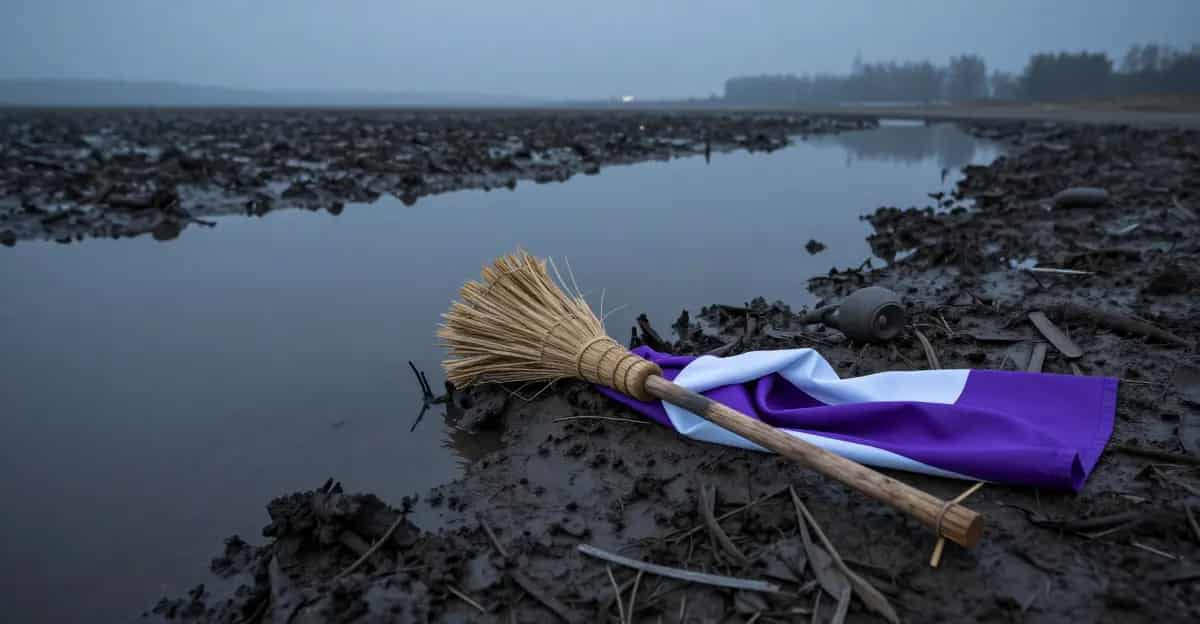
Osumare is the son of Nana Buruku, the oldest Orisha, and brother of Obaluaye. Together, mother and two sons form the earthly triptych — three deities bound to the earth, to ancestry, to death and renewal. But within that triptych, Osumare is the element of elevation: where Nana Buruku is the mud of the depths and Obaluaye is the earth that receives the dead, Osumare is the arc that rises to the sky and brings hope.
The Sacred Duality
Osumare's most striking characteristic is his dual nature, expressed on several levels:
- Snake and rainbow — crawls on the earth and shines in the sky
- Masculine and feminine — in many traditions, Osumare is masculine for six months of the year and feminine for the other six; or is a deity who transcends the gender binary
- Earth and sky — connects the two worlds, transporting the water between them
- Movement and permanence — always in transformation, yet the cycle is eternal
Because of this fluidity, Osumare has become, in contemporary readings, a powerful symbol of inclusion and fluid identities. For many LGBTQIA+ people within African-matrix religions, Osumare represents the sacredness of diversity — proof that, in Yoruba cosmology, duality and transition are not deviations, but expressions of the divine.
The Myth of Eternal Movement
It is told that Osumare has the mission of carrying the water of the earth back to Orun, the spiritual world, and bringing back the rain that fertilizes the world. It is he who ensures that the cycle of the waters never stops — that the rivers feed the sea, that the sea evaporates into clouds, that the clouds rain upon the earth, that the earth returns the water to the sky.
Without Osumare, the cycle would stop, and the world would die of drought or drown in deluge. It is his ceaseless movement, rising and descending between earth and sky like a luminous serpent, that keeps the balance of life.
It is also said that Osumare holds up the world: he is the great serpent coiled around the earth, keeping it from falling apart. When he needs to rest, he lays his head upon his tail — and that is the moment when we see the complete rainbow in the sky.
This myth makes Osumare the Orisha of continuity and renewal. He teaches that nothing in life is static: everything moves, everything transforms, everything returns. Difficult phases pass, just as the rain passes and the rainbow appears. The wheel always turns.
Sacred Attributes
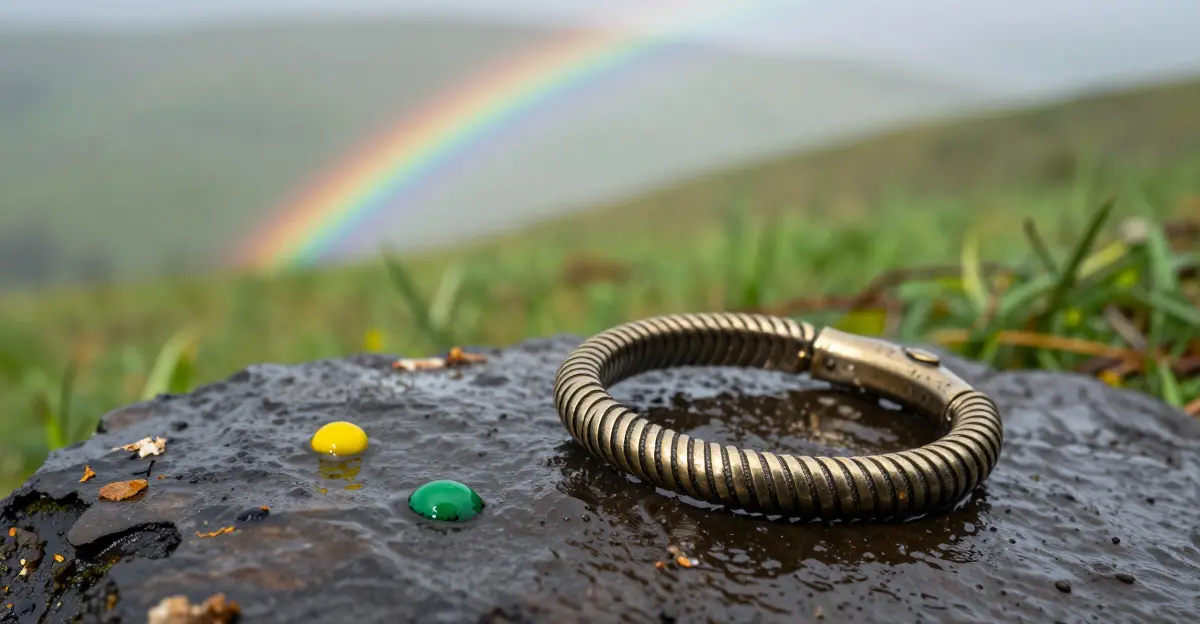
- Colors: green and yellow (the colors of the serpent and the rainbow); in some houses, all the colors of the rainbow
- Main symbol: the serpent, especially the one biting its own tail; the bradjá (a cowrie-shell necklace in serpent form worn by his children)
- Domain: the rainbow, snakes, cycles, wealth and continuity
- Votive food: batá (a kind of porridge), beans, sweet potato, eggs
- Day of the week: Tuesday (in some traditions, Monday, together with Nana Buruku's family)
- Elements: water in motion, the rain, the rainbow
- Greeting: Arroboboi!
(The colors, food and day above belong to the Afro-Brazilian cult — Jeje and Ketu Candomblé. Osumare's presence in Cuba and his root in Dahomey, quite different, are in the section just below.)
Osumare is also associated with wealth and fortune. Because he links sky to earth and moves by "bringing and carrying", he is invoked for prosperity that circulates, for abundance that renews itself. Wherever Osumare passes, they say, he leaves a trail of plenty.
Osumare in Dahomey, Cuba and Brazil
In the Fon/Ewe roots of old Dahomey (present-day Benin), Osumare corresponds to Dan (or Dangbé), the sacred serpent, one of the most revered deities. The rainbow-serpent Dan is seen as the support of the world and a symbol of continuity and wealth. The cult of the sacred serpent in Ouidah, Benin, remains alive to this day.
In Cuba, Oxumaré appears in the figure of Osumare or is associated with paths of other deities, his cult being less widespread than in Brazil.
In Brazil, Oxumaré is revered especially in Jeje and Ketu Candomblé. He is syncretized with Saint Bartholomew (whose day, August 24, is celebrated as Oxumaré's day in many houses). His children-of-saint are known for versatility, capacity for transformation and an energy of constant movement. The image of Oxumaré — the colorful serpent linking the worlds — is one of the most visually celebrated in the entire tradition.
Osumare and Personal Transformation
Osumare's message is deeply relevant to modern life. He is the Orisha who teaches that changing is not failing — it is living. In a culture that often demands we always be the same, coherent and fixed, Osumare reminds us that transformation is sacred.
The snake sheds its skin to grow. The rainbow only exists because rain and sun coexist. Water only renews itself because it is in motion. Osumare invites you to embrace your own transformations — the phases, the changes of direction, the reinventions — not as betrayals of who you were, but as expressions of who you are becoming.
How to Honor Osumare
- Embrace transformation. When life demands change, remember Osumare. Changing phase, mind or path is part of the sacred cycle, not a failure.
- Watch the rainbow. Next time you see a rainbow, stop and contemplate. It is the visible manifestation of Osumare, the bridge between the worlds. A moment of gratitude for the beauty of the cycles.
- Honor diversity. Osumare is the Orisha of fluidity and inclusion. Respecting and celebrating diversity — of gender, of identity, of ways of being — is living his energy.
- Trust the cycles. Every rain passes. Every winter ends. When you are in a difficult moment, Osumare reminds you that the wheel turns and renewal always comes.
- Cultivate prosperity that circulates. Osumare teaches that true wealth is the kind that moves and renews itself — shared, not stagnantly hoarded.
"The serpent rises to the sky and becomes a rainbow; the rainbow descends to earth and becomes a serpent. Nothing is only one thing. Everything transforms, everything returns, everything renews. Whoever understands the cycle never fears change."
Arroboboi, Osumare! May the serpent of the rainbow bring renewal to your cycles, beauty to your transformations, and the serene certainty that after every rain comes the arc of a thousand colors.
What you have read here is rooted in the 256 Odus of Ifá — the corpus we study verse by verse. Read them as contemplation: real divination belongs at the table of a consecrated babalawo.
Sources consulted
- Mitologia dos Orixás — Reginaldo Prandi
- Orixás — Pierre Fatumbi Verger, pp. 73–74
Written by
- Pablo de Lima (Awofakan)
- Thaiana de Lima (Ikofá)
A couple initiated in Ifá in the Cuban lineage — Regla de Ocha / Ifá.
Meet the authors →Last reviewed:
Get the wisdom in your inbox
One new article a week on Orishas, Odus and Yoruba philosophy. No spam.
Unsubscribe anytime, one click from any email.
Comments
Loading comments...
You need to sign in to comment.