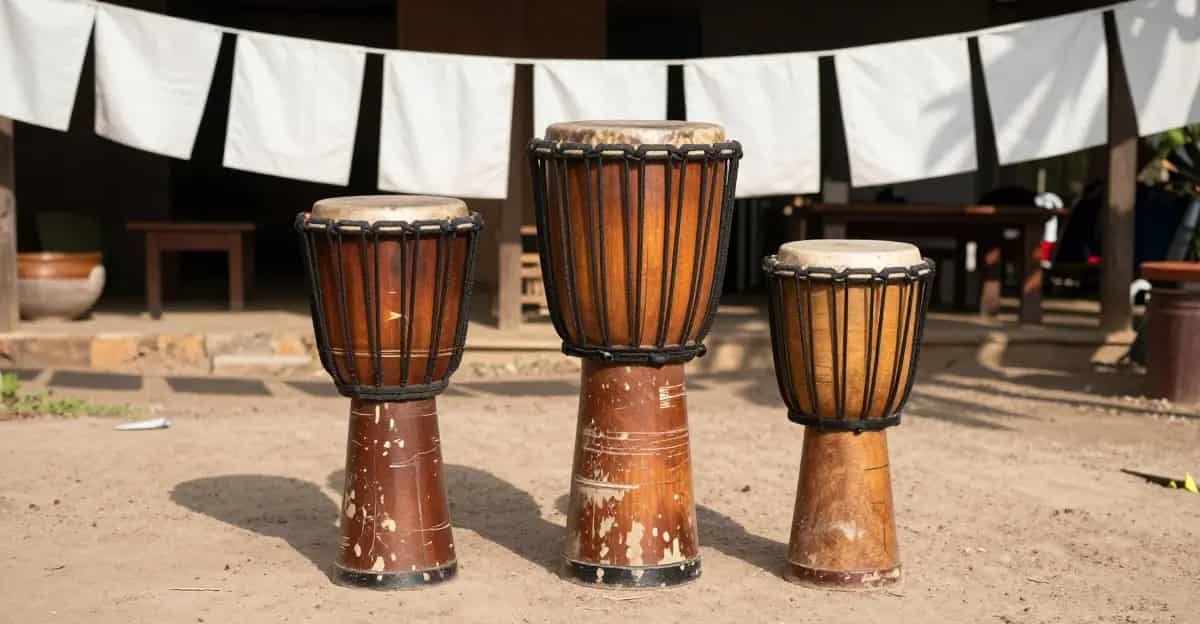
Saint George and Ogun: The History of Syncretism
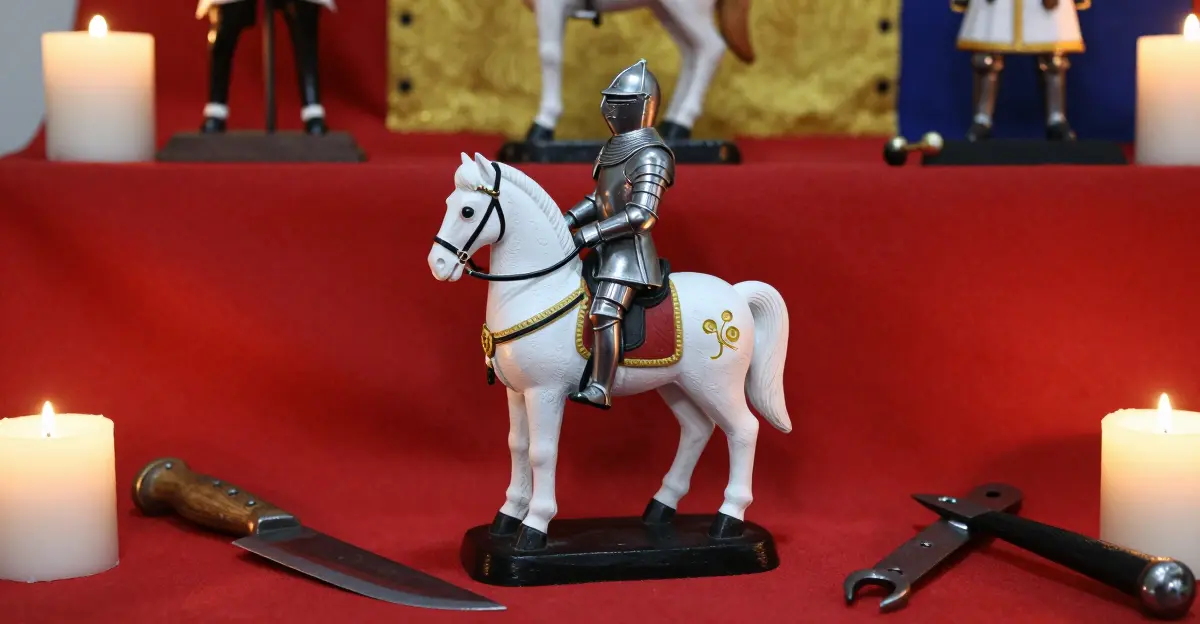
Today, April 23, millions of Brazilians celebrate two apparently opposite figures as though they were one: Saint George, the Roman soldier who killed the dragon, and Ogun, the Yoruba Orisha of iron, of just war and of civilisation. In Catholic churches the faithful light white candles to the warrior saint on his horse. In the terreiros of Candomblé and Umbanda the greeting is another: Ogunhê! Patakori Ogum!
How did a Christian saint from Cappadocia (in present-day Turkey) and an Orisha from Nigeria end up fused into a single devotion? The answer lies in one of the most painful and most ingenious chapters of Brazilian history: slavery, and African cultural resistance.
Saint George: The Soldier and the Dragon
George of Lydda was born in Cappadocia in the third century AD and served as a soldier in the Roman army. According to Christian hagiography, George converted to Christianity and refused to renounce his faith when the emperor Diocletian ordered the persecution of Christians. He was tortured and beheaded in 303 AD, and so became a martyr.
The legend of the dragon was added centuries later, in the Middle Ages. The story goes that George came upon a city terrorised by a dragon that demanded human sacrifice. The saint defeated the beast with his lance and freed the people. That narrative fixed him as the archetype of the just warrior who protects the weak against evil.
Saint George became the patron of several nations (Portugal, England, Georgia), of knights, of soldiers, and of all who face danger with courage. His feast day is April 23 — the traditional date of his martyrdom.
Ogun: The Orisha Who Opened the World's Paths
In the Yoruba tradition, Ogun is the primordial Orisha who cut through the impenetrable forest so that the other Orishas could descend to Earth. He is the lord of iron, of metalwork, of agriculture, of technology and of just war. His lance and his machete opened the roads of civilisation, quite literally.
Ogun is not merely a warrior — he is the civiliser. Without him there would be no tools to farm with, no weapons to defend with, no roads to travel. He is the sweat of creation, the spark of iron against the anvil. His domain extends to everything made of metal: from the farmer's hoe to the surgeon's scalpel, from the engine of a lorry to the chip in a computer.
His greeting echoes through the terreiros: Ogunhê! — and his colours are dark blue and green, the colours of depth and of virgin forest.
The Forced Encounter: How Slavery Created Syncretism
When the Portuguese trafficked millions of Africans to Brazil between the sixteenth and the nineteenth centuries, they carried over more than chained bodies — they carried an entire civilisation. The Yoruba (known in Brazil as Nagôs) held their Orishas in memory, along with their Odus, their Itans (sacred stories) and their rituals.
But in colonial Brazil the Catholic Church was the official spiritual power. The enslaved were required to be baptised and to attend Mass. Practising any religion other than Catholicism was forbidden by law — punished with the whip, the stocks, and sometimes death.
So the Africans found an ingenious solution: hiding the Orishas behind the Catholic saints. When the plantation owner saw an enslaved man praying before an image of Saint George, he took it for Catholic devotion. In truth, the man was revering Ogun.
This process is called syncretism — the fusion of elements from two distinct religious traditions as a strategy of cultural survival. It was not a theological choice; it was resistance.
Why Ogun Became Saint George — The Similarities the Enslaved Used
The choice was not random. Africans sought out the Catholic saints whose attributes came closest to their own Orishas. In Ogun's case the correspondences with Saint George were striking:
| Attribute | Saint George | Ogun |
|---|---|---|
| Archetype | Warrior | Warrior |
| Weapon | Lance / sword | Sword (Idá) / machete |
| Enemy | The dragon (evil) | Injustice and oppression |
| Protects | Soldiers, knights | Blacksmiths, warriors, travellers |
| Virtue | Courage, faith | Courage, resolve, honour |
| Symbol | Armour, horse | Iron, anvil, seven tools |
Both are figures of action, not of contemplation. Both meet danger head-on. Both protect the weak. The symbolic bridge was obvious to the Africans, and invisible to the masters.
Rio vs Bahia: The Same Orisha, Different Saints
Curiously, Ogun's syncretism is not uniform across Brazil:
In Rio de Janeiro and most of the south-east: Ogun is syncretised with Saint George. April 23 is a state holiday in Rio de Janeiro and in several other cities — kept with processions, Masses, atabaque drums and Umbanda giras, all at once.
In Bahia: Ogun is syncretised with Saint Anthony of Padua (June 13). The historical explanation is that the different Yoruba nations predominant in each region (Ketu in Rio, Jeje-Nagô in Bahia) made slightly different associations with the local saints most venerated there.
In some Candomblé Angola houses: Ogun may be associated with Saint Sebastian, the martyr pierced by arrows — another figure of warrior endurance.
Ogún in Cuba: Saint Peter and Santiago
In the Cuban diaspora (Santería / Regla de Ocha), Ogún was syncretised with San Pedro (Saint Peter) — the apostle who bears the key and the sword. In some lineages he is associated with Santiago Apóstol (Saint James), patron of Spain, commonly depicted as a warrior on horseback — another symbolic bridge to the Yoruba warrior.
The Current Debate: Syncretism, Yes or No?
Since the 1980s a growing movement within Brazilian Candomblé has argued for desyncretisation — separating the Orishas from the Catholic saints. The landmark was the 1983 Conference in Salvador, where prominent priestesses (among them Mãe Stella de Oxóssi, of Ilê Axé Opô Afonjá) declared publicly that the Orishas are not Catholic saints, and that the association had been imposed by slavery.
For those who argue for desyncretisation, keeping the syncretism perpetuates colonial violence — it goes on hiding the Orishas when hiding is no longer necessary. Ogun is Ogun. Saint George is Saint George. They are distinct traditions, and both deserve respect on their own terms.
For other practitioners, especially in Umbanda, syncretism has already become part of Brazilian identity — an authentic cultural fusion that outgrew its forced origins. For them, Saint George-Ogun is a new figure, born in Brazil, belonging to both worlds.
There is no right answer. What there is, is respect — for those who choose to keep the bridge, and for those who choose to return each tradition to its own place.
April 23: How It Is Celebrated
April 23 is lived in four registers at once across Brazil:
-
In the Catholic tradition: solemn Masses dedicated to Saint George in churches all over Brazil, especially in Rio de Janeiro, where the day is a state holiday. Processions carry the image of the saint on horseback through the streets.
-
In Candomblé: atabaque rhythms for Ogun, offerings of feijoada, roasted yam and dark beer. Ogun's children wear dark blue and green, dance with imaginary swords, and sing: "Ògún pá lélé o, akirí Lóòde!" — Ogun strikes with precision, he who walks the world.
-
In Umbanda: special giras where entities of the Line of Ogum (Ogum Megê, Ogum Rompe Mato, Ogum Beira-Mar) come down to work. The sung pontos mix references to Saint George and to Ogun in the same verse: "Jorge cavaleiro, Ogum de fé, protege os caminhos do seu povo de ase" — George the horseman, Ogun of faith, protect the paths of your people of ase.
-
In popular culture: supporters of Flamengo and of other Rio clubs hail Saint George as their patron — the link between the warrior, the struggle and the victory on the pitch.
A Lesson in Resistance
The story of Saint George and Ogun is not only religious — it is a lesson in the human capacity to keep an identity alive under extreme conditions. Enslaved Africans in Brazil did not lose their Orishas. They disguised them, protected them, handed them on in secret from one generation to the next — and today, more than four hundred years later, Ogun is still greeted in terreiros from the north of Brazil to the south.
Ogunhê! May Ogun's sword — and George's lance — cut every evil from your paths.
What you have read here is rooted in the 256 Odus of Ifá — the corpus we study verse by verse. Read them as contemplation: real divination belongs at the table of a consecrated babalawo.
Sources consulted
- Orixás — Pierre Fatumbi Verger, pp. 12–13
- Mitologia dos Orixás — Reginaldo Prandi
Written by
- Pablo de Lima (Awofakan)
- Thaiana de Lima (Ikofá)
A couple initiated in Ifá in the Cuban lineage — Regla de Ocha / Ifá.
Meet the authors →Last reviewed:
Get the wisdom in your inbox
One new article a week on Orishas, Odus and Yoruba philosophy. No spam.
Unsubscribe anytime, one click from any email.
Comments
Loading comments...
You need to sign in to comment.