Ewé: The Power of Sacred Leaves in Yoruba Tradition
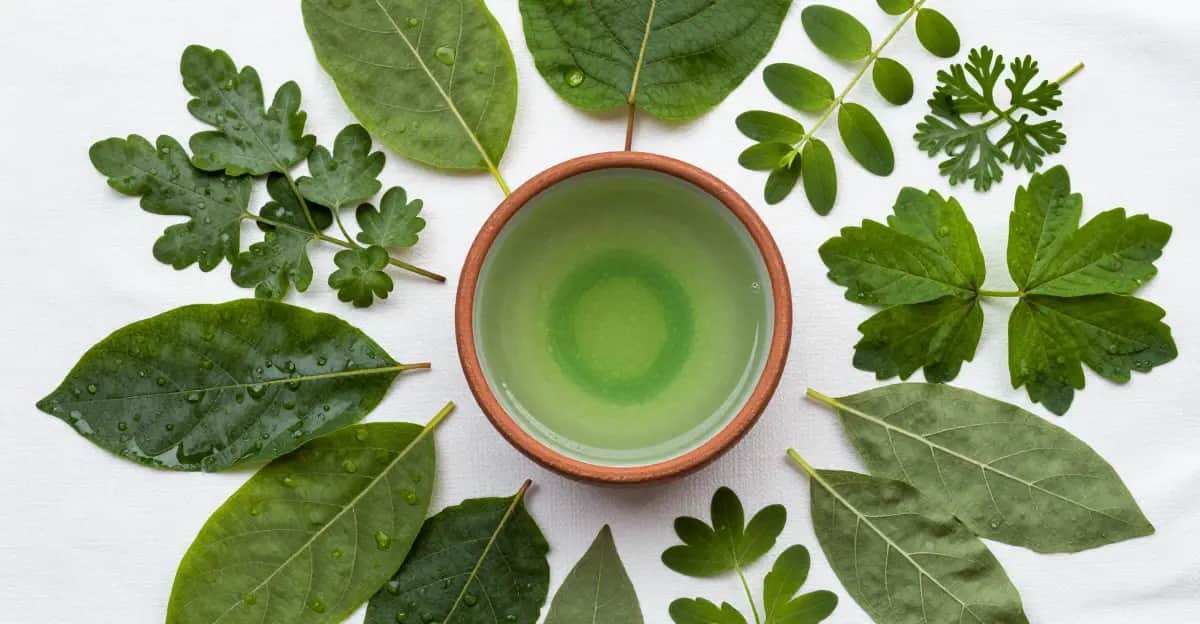
Kò sí ewé, kò sí Òrìṣà. "Without leaf, there is no Orisha." This is one of the most important sayings in the entire Yoruba tradition — and perhaps the most revealing. It says that without the sacred leaves (ewé, the Yoruba word for "leaf"), no ritual happens, no Orisha manifests, no healing is possible. Plants are not accessories of the religion: they are its own green blood.
To an outsider, the importance of leaves may seem secondary. But at the heart of African-matrix religions, the knowledge of herbs is the most sacred and most guarded knowledge of all. It is the bridge between the physical and spiritual worlds, between illness and healing, between the human and the divine.
The Ewé Principle: The Leaf Is Living Ase
Each leaf carries a specific kind of Ase — the sacred vital energy. When a leaf is gathered with the correct rituals, with the right words (the ofó, incantations), it releases its power. That is why no herb is picked at random: there is a right moment, a greeting, a request for permission from the plant and its guardian.
Leaves serve many functions in the tradition:
- Purification — cleansing negative energies from people and places
- Physical healing — Yoruba herbal medicine is sophisticated and ancient
- Consecration of Orishas — specific leaves consecrate the sacred objects
- Ritual baths — the famous amaci and the herbal baths
- Protection — leaves that ward off evil and attract blessings
Osanyin: The Guardian of the Leaves
All this wisdom belongs to one specific Orisha: Ossain (Ọ̀sányìn), the lord of leaves, herbs and medicine. Ossain holds the secret of every plant — which one heals, which one kills, which one opens paths, which one closes them.
The myth tells that, in the beginning, Osanyin alone held all the knowledge of the leaves, and therefore had immense power over the other Orishas, who depended on him for any cure. Shango, the Orisha of justice, ruled that this power should be shared among all — and Osanyin refused. Shango then ordered Oya to loose the wind: a hurricane tore the leaves from the forests and dragged them to the royal palace.
What happened next is the heart of the story. Osanyin cried out "Euê uassá!" — "the leaves work!" — and the leaves obeyed and returned to their forests. The few that stayed in Shango's hands had lost their ase: they healed nothing anymore. The defeat acknowledged, it was Osanyin himself who afterwards, of his own will, gave one leaf to each Orisha — each with its ofó, the song of enchantment without which the leaf does not work. The deepest secrets he kept for himself, and keeps to this day: Osanyin does not even speak; his servant Aroni speaks for him.
The lesson is harder than it looks: ase is not taken, it is received. What was seized by force arrived powerless in the hands that seized it. Each Orisha has their own leaves because Ossain gave them — and he remains the guardian and supreme master of the green. (Prandi, "Mitologia dos Orixás", myth "Ossaim dá uma folha para cada orixá".)
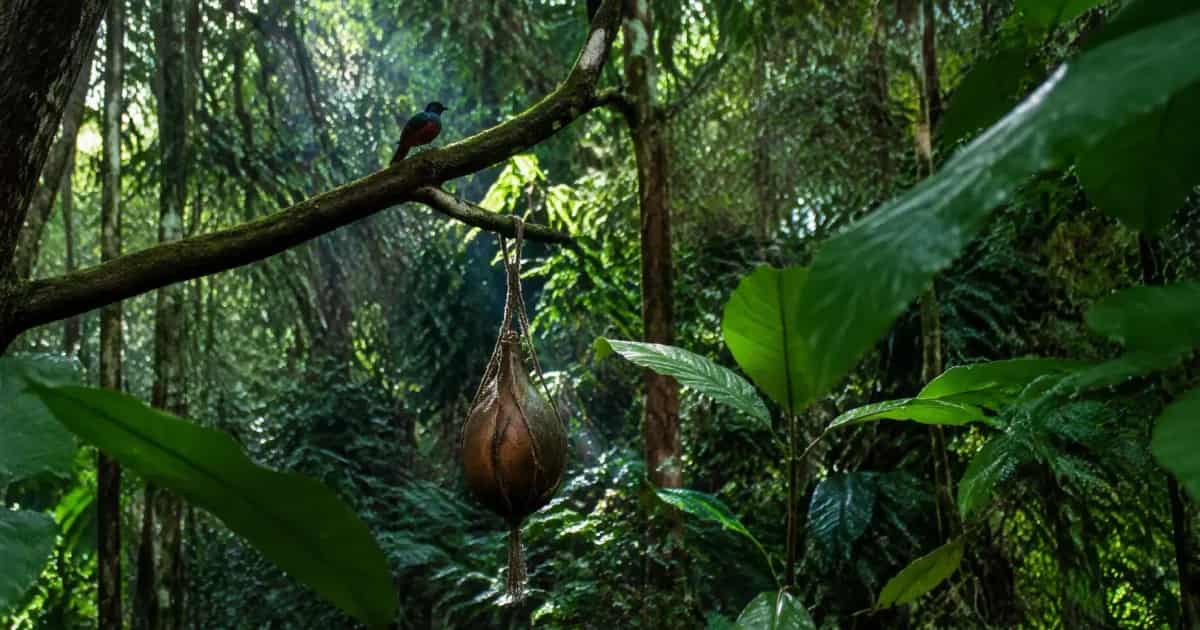
Osanyin is often depicted with one leg, one arm, one eye and one large ear — an unusual physical form that symbolizes his unique nature, bound to the forest and its mysteries. He lives in the woods, among the trees, and his voice is the sound of the birds.
The Leaves of Each Orisha
Each Orisha has their favorite leaves, which carry their specific energy. Some examples from the tradition (Brazilian popular plant names):
- Oxalá — saião, boldo, leaf of fortune (peace, creation, whiteness)
- Shango — St. John's wort, fire leaf (justice, strength, fire)
- Oshun — macassá, colônia, vassourinha (love, sweetness, fresh waters)
- Yemoja — pataqueira, basil, lavender (motherhood, sea, welcome)
- Ogun — snake plant, dumb cane (protection, opening of paths)
- Oshosi — wild basil, forest leaves (abundance, hunting, knowledge)
- Oya — folha-da-costa, cordão-de-frade (wind, transformation, courage)
- Obaluaye — canela-de-velho, vintém (healing, earth, health)
(The names above come from the Afro-Brazilian repertoire — saião, comigo-ninguém-pode and the rest are Brazilian popular names. In Cuba, the Regla de Ocha has its own corpus of plants, recorded in Lydia Cabrera's classic El Monte. Names vary by region and house; this list is illustrative, not a ritual manual — the real knowledge is transmitted orally by priests.)
Herbal Baths: Purification and Healing
Perhaps the most widespread — and most accessible — practice connected to the leaves is the herbal bath. Unlike an ordinary hygiene bath, the herbal bath is a ritual of energetic and spiritual cleansing.
The leaves are macerated (rubbed by hand in the water, never in a blender, to preserve the ase) and the resulting liquid is poured over the body, usually from the neck down, after a normal bath. There are baths for:
- Discharge — removing heavy, negative energies
- Attraction — calling in prosperity, love, good energies
- Protection — creating an energetic barrier
- Healing — supporting physical and emotional recovery
⚠️ A note of respect and safety: herbal baths for spiritual purposes are part of a tradition that should be learned from legitimate priests. Moreover, some plants are toxic or cause skin reactions. Never ingest herbs without proper guidance, and always seek medical care for health issues. Tradition and medicine walk together, not against each other.
Ewé in Science and Tradition
One of the most fascinating aspects of Yoruba leaf knowledge is how it anticipated discoveries of modern science. Many plants used for centuries in African rituals and traditional medicine have active compounds proven by pharmacology today.
Ethnobotany — the study of how different cultures use plants — recognizes African traditions as one of the richest repositories of medicinal knowledge in the world. What the elders knew through oral transmission and centuries of observation, laboratories now confirm with chromatography and clinical trials.
This does not "validate" the tradition — the tradition does not need science to have value. But it shows that Yoruba leaf knowledge is empirical, sophisticated and deeply wise, the fruit of generations of attentive observation of nature.
How to Respect the Power of the Leaves
- Revere plants. Even without being initiated, you can cultivate the Yoruba respect for nature. A plant is not just decoration — it is life, it is ase. Caring for a garden is a spiritual act.
- Learn from those who know. Real herbal knowledge is transmitted orally, from master to disciple. Distrust ready-made "recipes" on the internet — the tradition is living and contextual.
- Connect with the green. Walking in a forest, touching leaves, smelling herbs — it is a simple way to honor Osanyin and the Ewé principle.
- Unite tradition and care. Respecting the leaves does not mean abandoning medicine. It means recognizing that body and spirit walk together.
"The leaves speak. Each one has its name, its function, its secret. Whoever learns to listen to the green learns to listen to life itself. Without leaf, there is no Orisha — and without nature, there is no us."
May Osanyin, the guardian of the green, teach you reverence for the plants, and may the ase of the sacred leaves bring healing, protection and balance to your path.
What you have read here is rooted in the 256 Odus of Ifá — the corpus we study verse by verse. Read them as contemplation: real divination belongs at the table of a consecrated babalawo.
Sources consulted
- Mitologia dos Orixás — Reginaldo Prandi
Written by
- Pablo de Lima (Awofakan)
- Thaiana de Lima (Ikofá)
A couple initiated in Ifá in the Cuban lineage — Regla de Ocha / Ifá.
Meet the authors →Last reviewed:
Get the wisdom in your inbox
One new article a week on Orishas, Odus and Yoruba philosophy. No spam.
Unsubscribe anytime, one click from any email.
Comments
Loading comments...
You need to sign in to comment.