Osanyin (Osain): Orisha of Leaves, Medicine and the Secrets of the Forest
Kò sí ewé, kò sí Òrìṣà. "Without leaves, there is no Orisha." We already dedicated an entire article to the principle of the sacred leaves — now it is time to meet their lord. Because if every leaf carries Ase, there is an Orisha who guards the secret of each one: which heals, which kills, which opens paths, which closes them. That Orisha is Osanyin (Ọ̀sányìn) — and without him, no ritual in this tradition takes place.
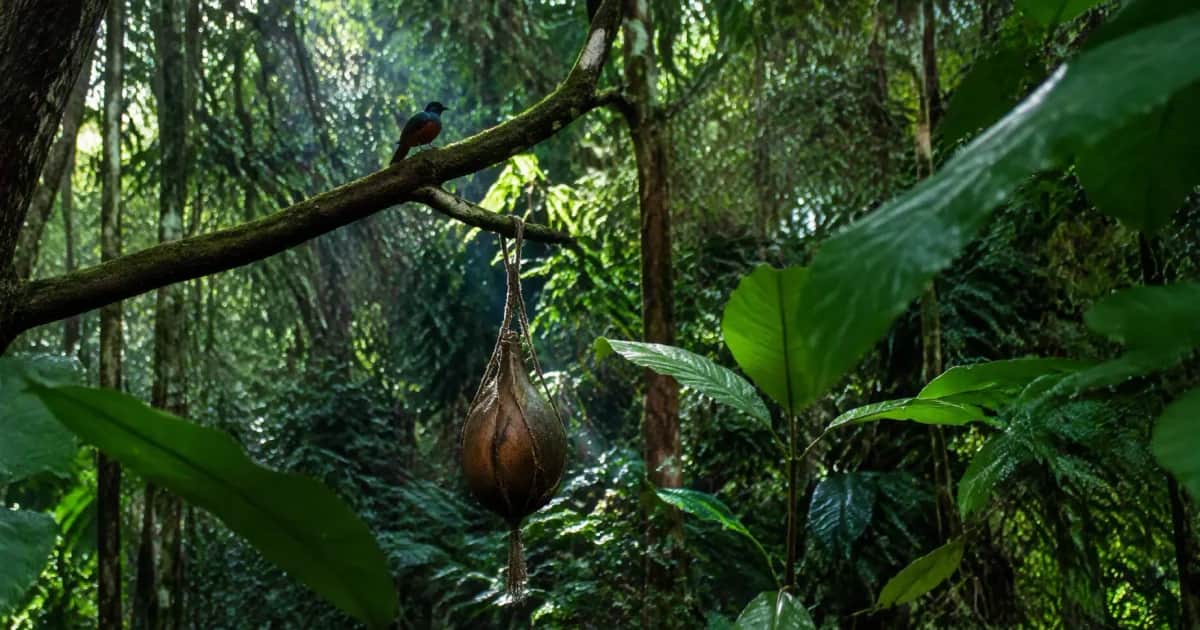
Osanyin is not an Orisha of crowds. He has neither the court of Shango, nor the river of Oshun, nor the storm of Oya. He has the forest — and in the forest, he has everything. He is the most solitary of the Orishas and, at the same time, the one on whom all the others depend. No shrine is consecrated, no bath prepared, no medicine made without the permission of the guardian of the green.
Who is Osanyin
Osanyin is the Orisha of leaves, herbs and medicine — the keeper of the sacred botanical knowledge that sustains the entire tradition. In Yoruba, Ọ̀sányìn; in Cuba, in the Regla de Ocha, he is called Osain, and his corpus of plants was recorded in Lydia Cabrera's classic El Monte.
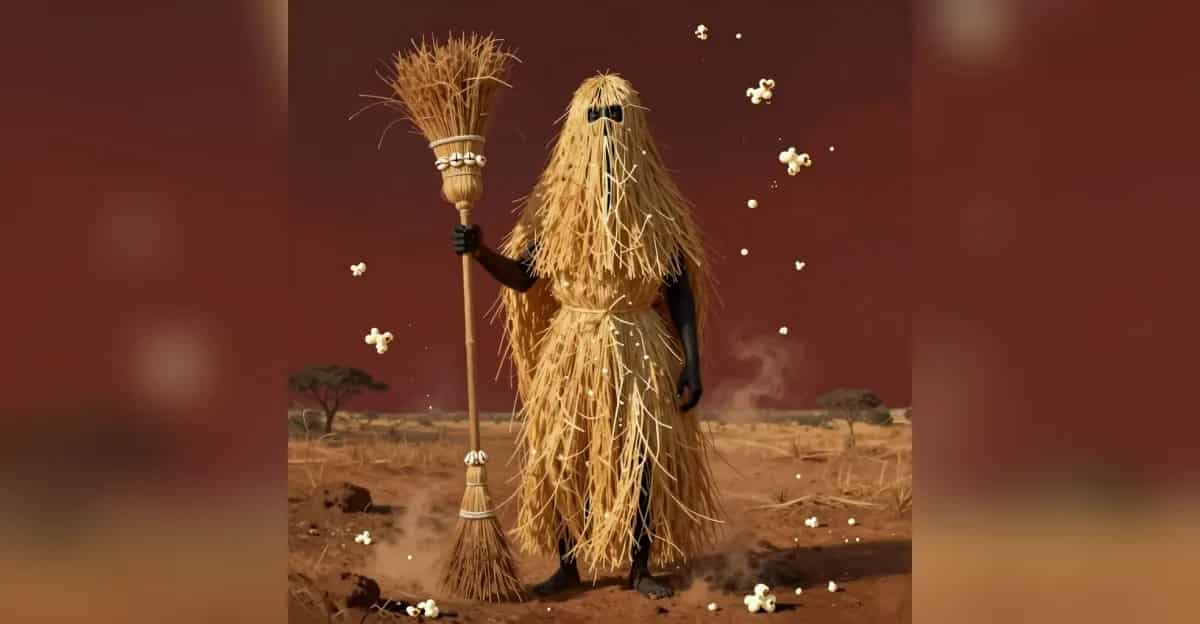
His form is unique among the Orishas: Osanyin is depicted with only one leg, one arm, one eye and one large ear — a body outside the norm that marks his nature, bound to the forest and its mysteries. He lives in the woods, among the trees, and his voice is the sound of birds.
And there is one detail that says everything about him: Osanyin does not even speak. The one who speaks for him is his servant Aroni — the one-legged messenger who carries the words of the lord of leaves into the world. The most essential Orisha is also the most silent: his power needs no speech, because it lives in every working leaf.
The Myth of the Sharing of the Leaves
The great myth of Osanyin explains why every Orisha has their own leaves — and why none of them owns the green.
The myth tells that, in the beginning, Osanyin alone held all the knowledge of the leaves, and therefore wielded immense power over the other Orishas, who depended on him for any healing. Shango, the Orisha of justice, ruled that this power be shared among all — and Osanyin refused. Shango then ordered Oya to release the wind: a hurricane tore the leaves from the groves and dragged them to the royal palace.
What happened next is the heart of the story. Osanyin shouted "Euê uassá!" — "the leaves work!" — and the leaves obeyed and returned to their groves. The few that remained in Shango's hands had lost their ase: they healed nothing anymore. Defeat acknowledged, it was Osanyin himself who, afterwards and of his own free will, gave one leaf to each Orisha — each with its ofó, the song of enchantment without which a leaf does not work. The deepest secrets he kept for himself, and keeps to this day.
The lesson is harder than it looks: ase is not taken — it is received. What was torn away by force arrived with no power at all in the hands of those who tore it. Every Orisha has their leaves because Osanyin gave them — and he remains the guardian and supreme master of the green. (Prandi, "Mitologia dos Orixás", myth "Ossaim dá uma folha para cada orixá".)
Notice the irony: Shango, the lord of justice, tried to share by force what can only be given. And Oya, the wind that moves everything, could not move the ase. Brute force does not transfer sacred power — only relationship, respect and legitimate giving do.
The Archive of Osanyin
The myth of the sharing is only the best known. The chapter that Reginaldo Prandi devotes to Ossaim in Mitologia dos Orixás holds an entire archive of myths, showing how many faces the lord of the leaves has:
- "Ossaim recusa-se a cortar as ervas miraculosas" (Ossaim refuses to cut the miraculous herbs)
- "Ossaim dá uma folha para cada orixá" (Ossaim gives a leaf to each orisha)
- "Ossaim cobra por todas as curas que realiza" (Ossaim charges for every cure he performs)
- "Ossaim imita um pássaro e casa com a filha do rei" (Ossaim imitates a bird and marries the king's daughter)
- "Ossaim vinga-se dos pais por o deixarem nu" (Ossaim takes revenge on his parents for leaving him naked)
- "Ossaim vem dançar na festa dos homens" (Ossaim comes to dance at the feast of humans)
- "Ossaim tem as suas oferendas rejeitadas por Orunmilá" (Ossaim has his offerings rejected by Orunmila)
- "Ossaim é mutilado por Orunmilá" (Ossaim is mutilated by Orunmila)
The titles alone teach: this is an Orisha who charges for his work, who deceives kings, who takes revenge on those who scorned him, who dances among men — and who has known mutilation. Osanyin is no decorative garden saint: he is a force of nature with an ethics of his own — demanding and whole.
Osanyin and Oshosi
No Orisha is closer to Osanyin than Oshosi, the hunter. But the myth that binds them is not one of adoption — it is one of abduction.
Yemoja, Oshosi's mother, had dark forebodings and consulted the babalawo. The warning was plain: forbid her son to hunt in the forests, because Osanyin, who reigned there, could take him captive. Oshosi was headstrong and disobeyed. One day he met Osanyin, who gave him a preparation to drink — and the hunter lost his memory. Bathed in abôs, he stayed on in the woods.
Ogun would not accept his brother's abduction: he searched for him, freed him and brought him home. But Yemoja did not forgive the disobedience and would not take him back. Oshosi returned to the forests, where he lives with Osanyin to this day. (Prandi, "Mitologia dos Orixás", myth "Oxóssi é raptado por Ossaim".)
Notice what the story does to its own opening: what began as a kidnapping ended as a choice. Oshosi was not held — he went back.
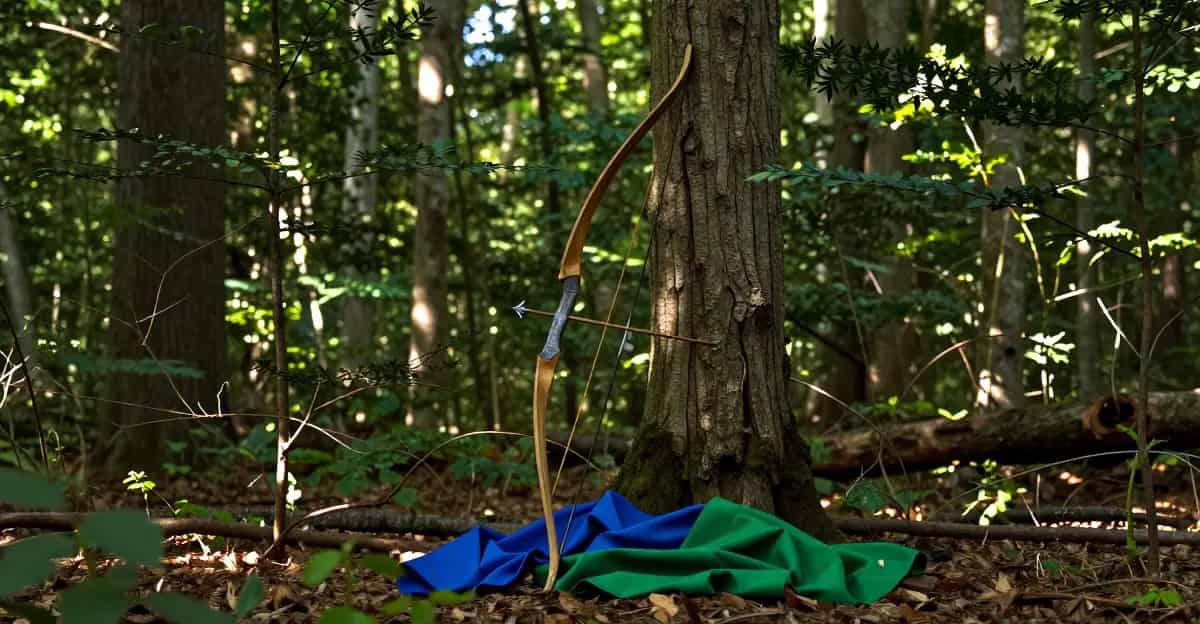
What does not vary is the deep logic that binds them: the hunter needs the leaves, and the leaves need one who knows the forest. Oshosi carries the arrow; Osanyin, the remedy for the wound the arrow opens. One seeks food; the other, healing. Together, they are the complete forest — the one that kills and the one that cures.
The Mutilated Form
Osanyin's physical form — one leg, one arm, one eye — is no decorative detail: it is theological mystery. Prandi keeps the myth that explains it, and the title misleads: "Ossaim é mutilado por Orunmilá" tells a story in which Orunmila never lays a hand on him.
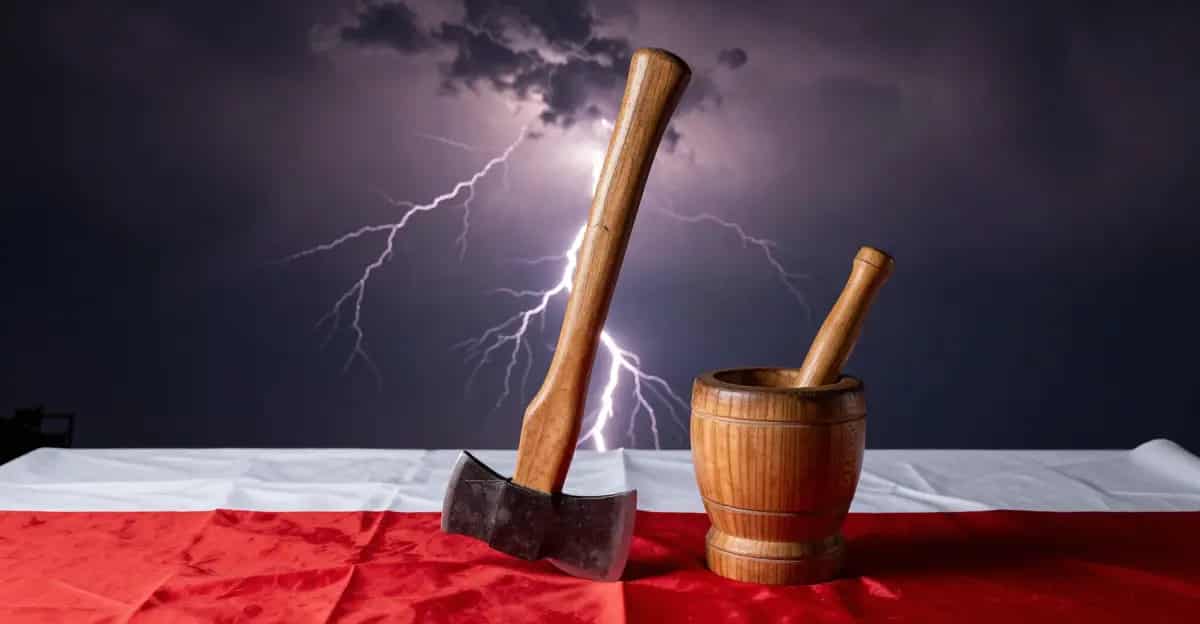
Osanyin waged an undeclared war on Orunmila, laying traps to torment the old man. Not knowing who the hidden enemy was, Orunmila consulted Shango, and the offering he was given was one of fire. As the rite began he called on the power of fire — and at that same moment, deep in the forest, Osanyin was seeking one more spell against him. He was caught by a bolt of lightning, which maimed his arm and his leg and blinded one eye.
The ending is what makes the story great: Orunmila went to where he saw the fire, heard the groans of the crippled man and tried to help the victim — it was in helping that he discovered who his enemy was. (Prandi, "Mitologia dos Orixás", myth "Ossaim é mutilado por Orunmilá".)
What the tradition makes clear, in any version, is the meaning: Osanyin's power does not dwell in a complete body, but in knowledge. The incomplete Orisha is the guardian of everything that completes the others — the leaf that closes the wound, the herb that restores health, the tea that soothes the soul. Those who have been wounded know healing like no one else.
Osanyin and Medicine
One of the most fascinating aspects of Osanyin's knowledge is how it anticipated discoveries of modern science. Many plants used for centuries in African rituals and traditional medicine now have active principles confirmed by pharmacology. Ethnobotany recognizes African traditions as one of the richest repositories of medicinal knowledge in the world: what the elders knew through oral transmission and centuries of observation, laboratories now confirm.
This does not "validate" the tradition — the tradition needs no science to have value. But it shows that Osanyin's knowledge is empirical, sophisticated and profoundly wise, the fruit of generations of attentive observation of nature.
⚠️ A note of respect and safety: this article teaches no remedies or recipes — and no honest article would. Real knowledge of herbs is transmitted orally, from priest to initiate, within legitimate houses. Moreover, some plants are toxic: never ingest herbs without proper guidance, and always seek medical care for health issues. Tradition and medicine walk together, not against each other.
How to Honor Osanyin in Daily Life
- Revere the plants. Even without being initiated, you can cultivate the Yoruba respect for nature. A plant is not decoration — it is life, it is ase. Tending a garden is a spiritual act.
- Harvesting has its rite. The tradition teaches that no leaf is picked at random — there is a greeting, a right moment, a request. This knowledge is transmitted within a house, from those who know to those who learn.
- Learn from those who know. Herbal knowledge does not live in internet "recipes": it lives in living transmission, from master to disciple. If this theme calls you, seek a serious house.
- Enter the forest. Walking among trees, touching leaves, listening to the birds — Osanyin's voice — is already a form of reverence to the guardian of the green.
The leaves speak. Each one has its name, its function, its secret. Those who learn to hear the green learn to hear life itself. Without leaves, there is no Orisha — and without nature, there is no us.
May Osanyin, the silent lord of the forest, teach you reverence for the plants — and may the ase of the sacred leaves bring healing, protection and balance to your path. Ewé ó!
What you have read here is rooted in the 256 Odus of Ifá — the corpus we study verse by verse. Read them as contemplation: real divination belongs at the table of a consecrated babalawo.
Sources consulted
- Mitologia dos Orixás — Reginaldo Prandi
Written by
- Pablo de Lima (Awofakan)
- Thaiana de Lima (Ikofá)
A couple initiated in Ifá in the Cuban lineage — Regla de Ocha / Ifá.
Meet the authors →Last reviewed:
Get the wisdom in your inbox
One new article a week on Orishas, Odus and Yoruba philosophy. No spam.
Unsubscribe anytime, one click from any email.
Comments
Loading comments...
You need to sign in to comment.