Beginner's Guide to Ifá: First Steps in the Yoruba Tradition

Welcome to Ifá. If you've made it here, something caught your attention — a word, a story, an intuition. Perhaps you've heard of the Orishas and want to understand who they are. Perhaps you've seen the term "Odu" and don't know what it means. Or perhaps you're simply curious about one of the oldest and most sophisticated spiritual traditions on the planet.
This guide is for you. No unnecessary jargon, no empty mysticism, no rush. We'll walk together through the fundamental pillars of Ifá — what it is, where it comes from, how it works, and how you can take your first steps with respect and authenticity.
What Is Ifá in 5 Minutes
Ifá is a system of wisdom, philosophy, and life guidance with a long history. It was born among the Yoruba people, in the region that today corresponds to Nigeria, Benin, and Togo in West Africa.
Ifá is not a religion in the Western sense — it has no single sacred book, no rigid dogmas, no demand for conversion. It is a philosophical-spiritual system that includes:
- A cosmology — an explanation of how the universe works, with the visible world (Ayé) and the spiritual world (Orun)
- A pantheon — the Orishas, forces of nature and divine archetypes that govern different aspects of existence
- An oracular system — the 256 Odus, binary patterns containing thousands of verses, stories, prescriptions, and prohibitions
- An ethics — a code of conduct based on Iwá Pelé (good character), truth, honesty, and respect for elders
- A practice — rituals, offerings, consultations, and ceremonies that connect humans to the spiritual world
Ifá was recognized by UNESCO as Intangible Cultural Heritage of Humanity in 2005 — one of the few oral knowledge systems to receive this distinction.
The Three Pillars: Orunmila, Orishas, and Odus
To understand Ifá, you need to know three fundamental concepts:
1. Orunmila — The Witness of Destiny
Orunmila (also called Ifá) is the Orisha of wisdom and divination. In Yoruba tradition, he is the witness of destiny — he was present when each soul chose its path before being born into the physical world.
Orunmila does not control destiny — he knows it. And it is through Ifá's oracular system that this knowledge is transmitted to humans. When someone consults the oracle, they are not "fortune-telling" — they are accessing Orunmila's wisdom about their path.
2. The Orishas — Forces of Nature
The Orishas are divine entities that represent forces of nature and fundamental aspects of human experience. They are not distant, indifferent gods — they are active energies that interact with the world and with human beings.
Some of the most well-known Orishas:
| Orisha | Domain | Element |
|---|---|---|
| Eshu | Communication, paths, movement | Crossroads |
| Ogun | Work, technology, just war | Iron |
| Oshosi | Knowledge, abundance, hunting | Forest |
| Shango | Justice, leadership, truth | Thunder and fire |
| Yemoja | Motherhood, emotions, sea | Ocean |
| Oshun | Love, fertility, diplomacy | River |
| Oya | Transformation, wind, courage | Storm |
| Obatala | Creation, peace, purity | White sky |
| Nana Buruku | Ancestry, wisdom, cycles | Primordial clay |
Each person has a special connection with certain Orishas — what in Candomblé is called "head Orisha" (Ori). This doesn't mean you "belong" to an Orisha, but that certain energies resonate more strongly in your life.
3. The 256 Odus — The Code of the Universe
The Odus are the heart of the Ifá system. They are 256 patterns (16 main × 16 combinations) that function as a vast database of wisdom. Each Odu contains:
- Verses (Ese Ifá) — stories, parables, and myths that illustrate life situations
- Prescriptions — what to do to align with the energy of the moment
- Prohibitions (Eewọ̀) — what to avoid to prevent attracting problems
- Associated Orishas — which forces are active in that pattern
Think of the Odus as chapters of a living encyclopedia: each one addresses a different theme — relationships, health, prosperity, conflicts, birth, death, transformation. When the oracle is consulted, the Odu that appears is the one containing the guidance relevant to your question or moment in life.
The first Odu, Ogbe Meji, speaks of new beginnings, success, and blessings. The second, Oyeku Meji, speaks of endings, transformation, and the wisdom of death. Together, all 256 form a complete vision of every possibility of human existence.
The Role of the Babalawo
The Babalawo (literally "father of secrets") is the priest of Ifá — the guardian of the oracular system. It is they who:
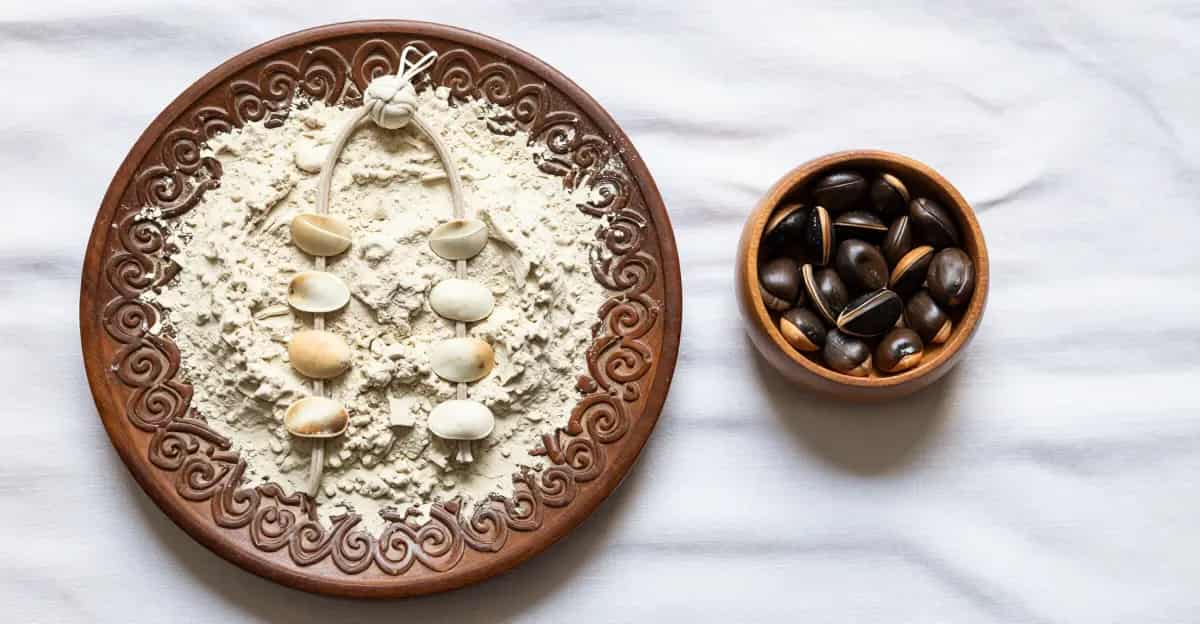
- Conduct consultations — using the opele (divination chain) or ikins (sacred palm nuts)
- Interpret the Odus — memorizing thousands of verses and knowing which story applies to each situation
- Prescribe rituals — recommending offerings, baths, prayers, or ceremonies based on the revealed Odu
- Initiate new practitioners — guiding those who wish to deepen their relationship with Ifá
A Babalawo's training is long and rigorous — it can take decades of oral study, verse memorization, ritual practice, and spiritual development. It is not a title that can be bought or self-attributed: it is conferred by other Babalawos after years of preparation.
Who may be a Babalawo depends on the tradition, and this site will not pretend there is a single answer. In the Cuban Regla de Ocha, our own lineage, the Babalawo priesthood is male, and women receive the Ikofá. In Nigerian Ìṣẹ̀ṣe, women are consecrated as Ìyánífá — mothers of Ifá — and work the oracle with the Opele and the Ikin in full authority; not every lineage there accepts this, and the debate is live inside Nigeria itself.
Brazilian Candomblé is a separate matter, and worth not conflating: the Iyalorixá leads entire terreiros with enormous authority, but hers is Orisha priesthood and her oracle is the merindilogun, the cowries — not Ifá. These are distinct priesthoods, not male and female versions of one.
How a Consultation Works
An Ifá consultation, in its traditional form, works like this:
- The consultant asks a question — it can be about health, work, relationships, paths, or any aspect of life
- The Babalawo casts the opele or manipulates the ikins — generating a binary pattern (single or double marks)
- The Odu is identified — the pattern corresponds to one of the 256 Odus
- The verses are recited — the Babalawo recites the Ese Ifá (verses) of that Odu
- The interpretation is given — based on the verses, the Babalawo explains what the Odu reveals for the consultant's situation
- Prescriptions are given — what to do (or not do) to align with the revealed energy
It's important to understand: Ifá does not predict the future deterministically. It doesn't say "you will marry in March" or "you will win the lottery." What it does is reveal tendencies, energies, and paths — and provide guidance on how to navigate them with wisdom.
What about digital consultation?
Platforms like Ifá Wisdom offer a contemplative version of the consultation. They don't replace the Babalawo — but they provide a moment of guided reflection based on the same principles: the 256 Odus, the wisdom of the verses, and the connection with tradition.
Think of it as the difference between reading a philosophy book alone and discussing it with a professor. Both are valid. The book doesn't replace the professor, but it can open doors you didn't know existed.
What Ifá Is NOT: Debunking Misconceptions
Before going deeper, it's essential to clear up some common misunderstandings:
"Ifá is black magic / witchcraft"
No. Ifá is a philosophical system recognized by UNESCO, with an intellectual sophistication comparable to Greek and Chinese philosophies. The association with "black magic" stems from centuries of colonialism and religious prejudice against African traditions.
"Ifá is fortune-telling / card reading"
Not exactly. While it includes an oracular system, Ifá is far more than "predicting the future." It is a complete system of philosophy, ethics, natural medicine, psychology, and life guidance. The oracle is just one tool within this system.
"Ifá is incompatible with other religions"
It depends. Ifá is, at its core, a philosophy of life. Many people practice Ifá while maintaining other spiritual traditions. In Brazil, Candomblé and Umbanda are examples of how the Yoruba tradition has adapted and coexists with other influences. Respect is the fundamental principle.
"I need to be African / Black to practice Ifá"
No. Ifá is a universal tradition of wisdom. Just as you don't need to be Greek to study Plato or Indian to practice meditation, you don't need to be African to connect with Yoruba wisdom. What is necessary is respect, humility, and a genuine desire to learn.
"Ifá involves animal sacrifice / dangerous practices"
Context is everything. Some traditions within Ifá include animal offerings as part of specific rituals — ancient practices and have deep spiritual significance. However, the vast majority of Ifá practices involve simple offerings (fruits, honey, water, flowers) and contemplative practices. No one is forced to do what they're uncomfortable with.
Essential Concepts for Beginners
These are the terms you'll encounter repeatedly on your journey:
- Ase (àṣẹ) — the sacred vital energy that permeates everything. It is the fuel of the universe. Read more about Ase →
- Ayé — the physical world, the earth, where we live
- Orun — the spiritual world, where the Orishas and ancestors reside
- Ori — individual consciousness, the "inner head" that guides each person
- Iwá Pelé — good character, the greatest virtue in Ifá
- Ẹbọ — ritual offering, can be simple (fruit, water) or elaborate
- Eewọ̀ — prohibition, something the Odu reveals should be avoided
- Itã — the story associated with each Odu
- Ese Ifá — the sacred verses recited by the Babalawo
How to Take Your First Steps
If Ifá has sparked your interest, here are practical and respectful suggestions for getting started:
1. Read and Study
Before any practice, inform yourself. Read about Yoruba history, about the Orishas, about the philosophy of Ifá. Good starting points on this blog:
- What Is Ifá? → — an overview of the philosophy
- What Is Ase? → — the vital energy that connects everything
- Articles about each Orisha — Eshu, Ogun, Oshosi, Shango, Yemoja, Oshun, Oya, Obatala, Nana Buruku
2. Try a Contemplative Consultation
Consulting the Ifá oracle — even on a digital platform — is a way to begin a dialogue with this ancient tradition. It's not "playing fortune-teller": it's a moment of reflection, pause, and inner listening.
3. Respect the Tradition
Ifá is not a spiritual buffet where you pick and choose what suits you. If you want to explore deeper practices, seek guidance from legitimate people — Babalawos, Iyalorishas, Candomblé or Umbanda priests with community-recognized training.
4. Cultivate Iwá Pelé (Good Character)
The most important practice of Ifá doesn't involve any ritual: it's living with good character. Honesty, respect, generosity, patience, humility. If you cultivate Iwá Pelé, you're already practicing Ifá's most fundamental teaching.
5. Connect with Nature
The Orishas are in nature. Ogun is in iron and technology. Oshun is in rivers. Yemoja is in the sea. Shango is in thunder. Going outside and paying attention to the natural world is a simple and powerful way to begin perceiving these energies.
6. Keep an Open Mind
Ifá may challenge some of your current beliefs — about death, about destiny, about the relationship between the visible and the invisible. You don't need to accept everything immediately. Ifá itself teaches that wisdom comes with time, and that the path is made by walking.
Where to Continue
Ifá is an ocean — and this guide is just the first dive. Here are the recommended next steps:
- Explore the Ifá Library — access here — with structured lessons about Orishas, Odus, and philosophy
- Consult the Oracle — even a simple consultation can reveal surprising reflections
- Understand the Birth Odu — read about Birth Odu →
- Follow the Odu of the Day — see today → — a 2-minute daily practice
- Read upcoming articles — every week we publish new content about Ifá, Orishas, and Yoruba tradition
"Ẹni tó mọ̀ ọjọ́ ìbẹ̀rẹ̀ kò ní mọ̀ ọjọ́ ìparí." — He who knows the day of beginning will not know the day of ending. What matters is to begin.
The wisdom of Ifá awaits you — with patience, without rush, as it always has. The first step is curiosity. You've already taken it.
What you have read here is rooted in the 256 Odus of Ifá — the corpus we study verse by verse. Read them as contemplation: real divination belongs at the table of a consecrated babalawo.
Sources consulted
- Ifa Divination — William Bascom, pp. 3–12
- Sixteen Great Poems of Ifá — Wándé Abímbọ́lá, p. 29
Written by
- Pablo de Lima (Awofakan)
- Thaiana de Lima (Ikofá)
A couple initiated in Ifá in the Cuban lineage — Regla de Ocha / Ifá.
Meet the authors →Last reviewed:
Get the wisdom in your inbox
One new article a week on Orishas, Odus and Yoruba philosophy. No spam.
Unsubscribe anytime, one click from any email.
Comments
Loading comments...
You need to sign in to comment.