History of Candomblé: From Africa to Brazil — 500 Years of Resistance
The history of Candomblé is one of humanity's most extraordinary stories of cultural resistance. It is the story of how a people torn by force from their land, shackled, sold and forbidden to exist managed, against all odds, to preserve their gods, their language, their music and their soul — and to make them flourish on a foreign continent.
To understand Candomblé, you must cross an ocean and five centuries. This is the story of an impossible survival that happened anyway.
The Origins in West Africa
Long before the first slave ship, the religions that would give rise to Candomblé already existed, vibrant and sophisticated, in West Africa. Three great cultural matrices would form the foundation:
- The Yoruba (present-day Nigeria and Benin) — brought the worship of the Orishas and the oracular system of Ifá. Their religious tradition, organized around city-states such as Oyó, Ifé and Ketu, was (and is) one of the most complex in the world.
- The Fon/Ewe (old Dahomey, present-day Benin) — brought the Voduns, deities that gave rise to Jeje Candomblé, among them Dan, the sacred serpent who in Brazil would become Oxumaré.
- The Bantu (Angola, Congo, Mozambique) — brought the Inquices and deep linguistic and cultural influences, the basis of Angola/Congo Candomblé.
These were not "primitive beliefs", as colonial propaganda would have it. They were elaborate theological and philosophical systems, with complex cosmologies, sophisticated ethics, advanced medicinal knowledge — such as the wisdom of the sacred leaves — and oral traditions that rival, in depth, any great religious tradition in history.
The Atlantic Trade: The Crossing of Pain
Between the 16th and 19th centuries, the transatlantic slave trade tore millions of Africans from their lands and brought them by force to the Americas. Brazil was the largest destination of all: the estimates of the academic Slave Voyages database point to about 4.9 million enslaved Africans disembarked at Brazilian ports — nearly ten times more than those taken to North America.
In the holds of the slave ships, in inhuman conditions, the Africans carried no material goods. But they carried something no chain could imprison: memory. Memory of their Orishas, their prayers, their rhythms, their stories. And it was this memory, passed from mouth to ear, from generation to generation, that would become the seed of Candomblé.
Preservation Against Everything
The genius of African cultural survival in Brazil lies in the ingenious strategies the enslaved created to preserve their faith under the most brutal prohibition:
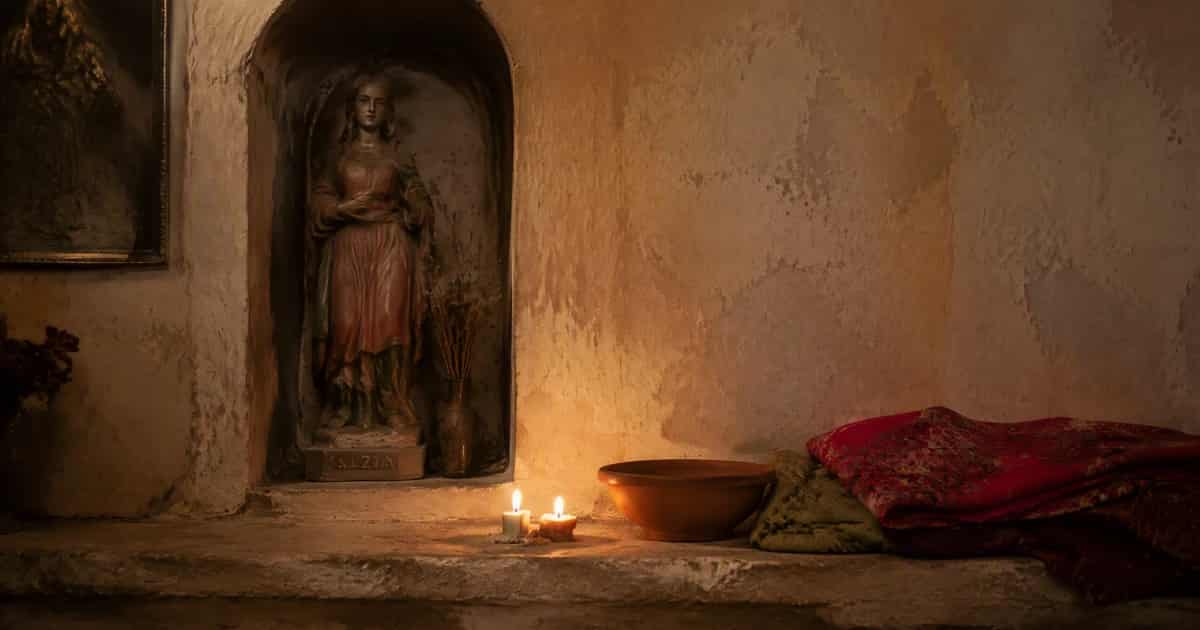
Syncretism as disguise. Forbidden to worship their Orishas, Africans hid them behind the Catholic saints their masters forced them to venerate. Ogum became Saint George in Rio de Janeiro and Saint Anthony in Bahia (read the story of this syncretism); Iemanjá became Our Lady; Xangô became Saint Jerome. When they knelt before a Catholic image, many were in fact praying to their own gods. The Catholic altar was the mask; the Orisha was the face.
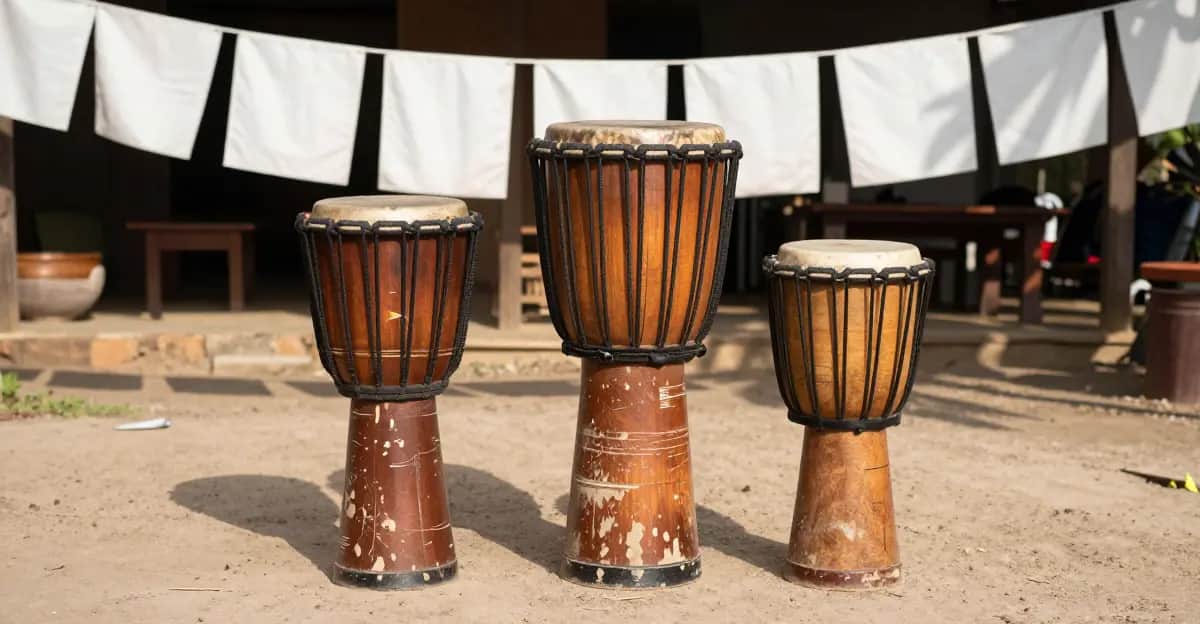
Music as code. The drums, forbidden and persecuted, were at once an instrument of "permitted" festivity and a sacred language. Each Orisha has their rhythm (toque), and the drum spoke what the mouth could not say.
Brotherhoods and quilombos. Black religious brotherhoods (such as that of Our Lady of the Rosary) and the quilombos — communities of escaped enslaved people — became spaces of cultural and religious preservation.
The First Terreiros: Salvador, the Heart
It is in Bahia, especially in Salvador, that Candomblé organizes formally as we know it. In the early 19th century, what is considered the oldest continuously operating terreiro in Brazil was founded: the Casa Branca do Engenho Velho (Ilê Axé Iyá Nassô Oká), matrix of Ketu Candomblé.
From Casa Branca came other historic and fundamental terreiros:
- The Gantois (Ilê Iyá Omin Axé Iyá Massê), immortalized by the legendary Mãe Menininha do Gantois
- The Ilê Axé Opô Afonjá, founded by Mãe Aninha
These terreiros were not merely places of worship: they were centers of cultural resistance, of preservation of the Yoruba language, of education, of shelter and of the rebuilding of a people's dignity. They were, and are, free African territory on Brazilian soil.
Centuries of Persecution
The history of Candomblé is also a history of persecution that did not end with abolition. Even after 1888, Candomblé remained criminalized and persecuted:
- Police raided terreiros, arrested practitioners, confiscated sacred objects
- The Penal Code of 1890 criminalized "spiritism", "magic" and "quackery" — terms used to persecute African religions
- Until the mid-20th century, police authorization was required to hold Candomblé ceremonies in many states
- Confiscated sacred objects were for decades displayed as "witchcraft pieces" in police museums
And, unfortunately, persecution persists today in new forms: religious intolerance against African-matrix religions remains a wound in Brazil, with terreiros attacked and practitioners discriminated against.
The Cultural Rebirth
Despite everything, the 20th century witnessed an extraordinary rebirth and recognition of Candomblé and Afro-Brazilian culture:
- Intellectuals such as Pierre Verger, Roger Bastide and Edison Carneiro studied and shared the richness of Candomblé, helping to dismantle prejudice
- Writers such as Jorge Amado brought the Orishas to world literature
- Brazilian music — from samba to ase music — incorporated and openly celebrated the African heritage
- Mães and pais de santo became respected public figures, recognized guardians of a national heritage
- The 1988 Constitution guaranteed (at least in the letter of the law) full religious freedom
Today, Candomblé is recognized as an essential and non-negotiable part of Brazilian cultural identity. The Orishas are no longer a secret hidden behind saints — they are a proud and visible presence in the culture, art, music and spirituality of Brazil.
Why This History Matters
The history of Candomblé is not only a religious history — it is a lesson in the resilience of the human spirit. It is proof that culture can survive the most brutal oppression, that memory is stronger than chains, that a people's gods do not die just because someone tried to kill them.
Every time a drum sounds in a terreiro, every time an Orisha dances in the head of a filho-de-santo, every time someone hails "Ase!" — a historical miracle is happening: the continuity of a tradition that crossed the ocean of death and refused to disappear.
The Orishas crossed the Atlantic in the holds of the ships, hidden in the memory of those who had nothing left — and on the far shore they flourished. They tried to bury that faith; it was seed. Candomblé is living proof that the memory of a people is stronger than any chain.
One distinction historians of the Afro-Atlantic religions (Bastide, Prandi) draw is worth keeping, because it separates the two sides of the ocean. In Brazil, what the resistance settled as the everyday oracle was the merindilogun — the cowrie divination of the iyalorixás and babalorixás. The priesthood of Ifá proper, of the babalawos with the Opele and the Ikin, kept its most structured continuity in Cuba (the Regla de Ocha and of Ifá). These are distinct offices, and recognizing it is part of treating each one precisely.
To know the history of Candomblé is to pay homage to that resistance. It is to recognize that, when you approach the wisdom of the Orishas and of Ifá, you touch a tradition that survived the unthinkable to reach you — and that deserves to be treated with all the respect, depth and reverence its history demands.
What you have read here is rooted in the 256 Odus of Ifá — the corpus we study verse by verse. Read them as contemplation: real divination belongs at the table of a consecrated babalawo.
Sources consulted
- Slave Voyages
Written by
- Pablo de Lima (Awofakan)
- Thaiana de Lima (Ikofá)
A couple initiated in Ifá in the Cuban lineage — Regla de Ocha / Ifá.
Meet the authors →Last reviewed:
Get the wisdom in your inbox
One new article a week on Orishas, Odus and Yoruba philosophy. No spam.
Unsubscribe anytime, one click from any email.
Comments
Loading comments...
You need to sign in to comment.