Yoruba Glossary: 60+ Essential Terms of Ifá and Candomblé
Mo júbà! Whoever begins to study the Yoruba tradition dives, first of all, into a sea of new words: Odu, Ase, ebo, babalawo, patakí. And each word arrives spelled two or three ways, because it crossed the Atlantic more than once — the spelling of Brazilian Candomblé, of Cuban Santería, of Nigeria.
This glossary gathers more than 60 essential terms, organized by theme and in alphabetical order. Every entry was checked against the works this site rests on — Beniste's Dicionário Yorubá-Português for the language, Abímbọ́lá and Verger for Ifá and Nigeria, Prandi for Brazil, the Tratado Enciclopédico de Ifá for the Cuban forms — and closes with the work and the page where the definition can be verified. Where we found no source, we say so.
An honest note before we begin: Yoruba is a tonal language — the same syllable changes meaning with the tone. That is why we invent no pronunciation guides. We give the most common spellings and leave the sound to those who teach it by voice, as the tradition always has.
The Traditions
- Candomblé — the Brazilian religion that preserved the worship of the Orishas. The house of worship is the terreiro, in the care of a pai or mãe de santo; it is organized in nations, each with its own liturgy. Verger, Orixás, p. 32; Prandi, Introduction. The full history →
- Ìṣẹ̀ṣe — the contemporary name for the traditional Yoruba religion as practiced in Nigeria. The term does not appear in the classic works of our bibliography; Beniste records ìṣẹ̀dáyé, "origin of the world," from the same root. Beniste, p. 400; acknowledged gap.
- Lucumí — the name the Yoruba and their descendants received in Cuba; also the ritual language of Santería. Verger describes the cabildos of Regla, "brotherhoods made up of descendants of Lucumí (Yoruba) Africans." Verger, Orixás, p. 72.
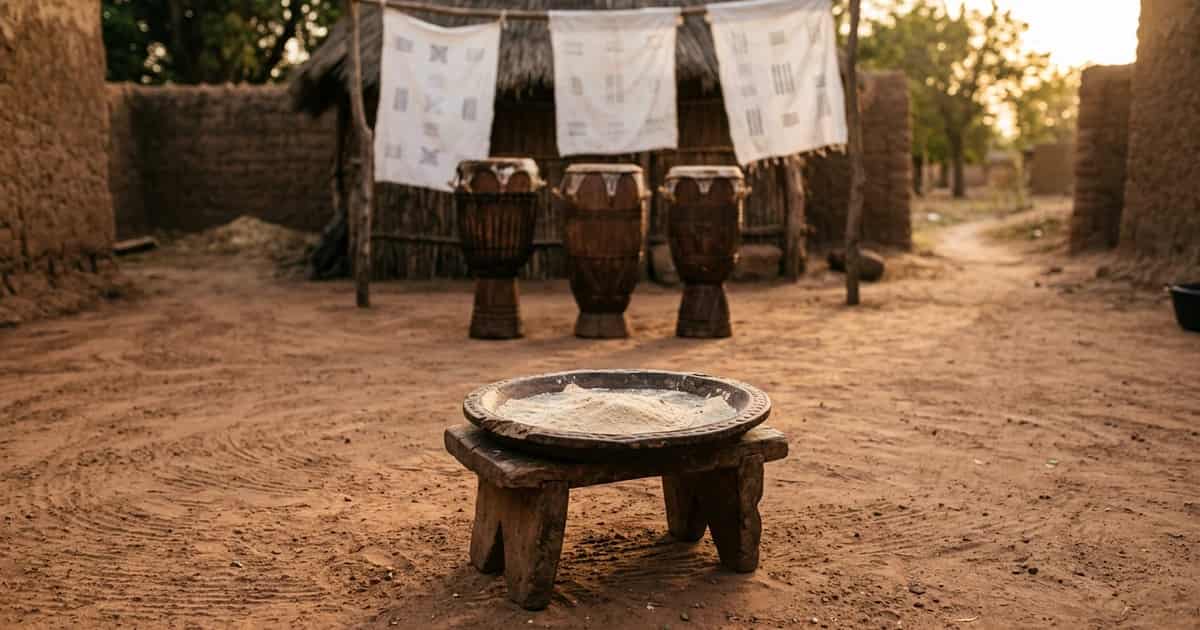
- Nation (nação) — in Candomblé, the liturgical lineage of origin: Ketu (Yoruba, also called Nagô), Jeje (Fon/Ewe, the people of the Voduns) and Angola (Bantu). The drums already tell the difference: pegs on the Nagô and Jeje drums, wooden wedges on the ngomas of Congolese and Angolan origin. Verger, Orixás, p. 33; Prandi, s.v. Vodum.
- Regla de Ocha — the proper name of the Cuban tradition of the Orishas, popularly called Santería; the Regla de Ifá is the branch of the Ifá priesthood. "Ocha" is the Cuban form of òrìṣà. Prandi, Introduction; Tratado, passim.
- Umbanda — a Brazilian religion born in the twentieth century, which Verger describes as "a mixture of the African religions, the spiritism of Allan Kardec and other philosophical-religious elaborations of universalist tendency." Verger, Orixás, p. 71.
Divinities and Beings
- Egun (Égún, Egúngún; in Cuba, eggún) — the ancestor, the spirit of the dead; some Orishas are deified eguns. Oya is "the owner of the eguns." Prandi, s.v. Egum and Oiá.
- Eshu (Èṣù; in Brazil, Exu; in Cuba, Elegbá, Elegguá) — the divinity of communication between heaven and Earth, of the roads and of fertility; the crossroads belongs to him. Always the first to be greeted. It is Eshu who keeps the àṣẹ with which Olodumare created the world — which is why even the other Orishas need him. In Cuba, Eleguá names the Orisha and "Eshu" is reserved for his dangerous aspects. He is not the devil: that association is a colonial inheritance. Beniste, p. 218; Abímbọ́lá, p. 5; Prandi, s.v. Exu and Eleguá. Full article →
- Oya (Ọya; in Brazil, Iansã, from Yánsàn, "the mother of nine children"; in Cuba, Oyá, Yansá) — Orisha of the winds, the lightning and the storm, mistress of the eguns and one of Shango's wives. Prandi, s.v. Iansã and Oiá. Article →
- Yemoja (Yemọja; in Brazil, Iemanjá; in Cuba, Yemayá) — owner of the waters and mother of the Orishas. In Nigeria she is worshipped at the Ògùn river, in Abẹ́òkúta; in the diaspora she became the lady of the sea. Beniste, p. 562; Prandi, s.v. Iemanjá. Article →
- Irunmole (irúnmọlẹ̀, imọlẹ̀) — the divinities who inhabited the Earth in primordial times and took part in Creation. They are said to be 401 — that is, countless. Prandi, "Odudua cai na armadilha que ele mesmo prepara para Oxalá"; Beniste, p. 225 (s.v. ẹbọra).
- Logun Ede (Lógun Ède; in Brazil, Logunedé) — Orisha of hunting and fishing, "son of Erinle or Oshosi with Oshun": Erinle in Nigeria and Cuba (where he is called Inle), Oxóssi in Brazil, who took the father's place in many myths. Prandi, s.v. Logum Edé and Erinlé. Article →
- Nana Buruku (Nàná Bùrúkú; in Brazil, Nanã) — Orisha of the bottom of the lakes, owner of the mud with which Obatala shaped the human being; mother of Obaluaye and Osumare, with whom she forms the triad of Dahomean Voduns absorbed into the pantheon of the Orishas. Prandi, s.v. Nanã; Verger, Orixás, p. 75. Article →
- Oba (Ọ̀bà; in Brazil, Obá; in Cuba, Obba) — Orisha of the Oba river, one of Shango's wives. Not to be confused with ọba, "king." Prandi, s.v. Obá. Article →
- Obaluaye (Ọbalúayé, "King and Owner of the Earth"; in Brazil, Obaluaiyê or Omolu, "Son of the Lord"; Ṣànpọ̀nná, whose name is dangerous to pronounce; in Cuba, Babalú Ayé; in the Arará lineage, Azowanu) — lord of the earth, of contagious diseases and of healing. His worship, like Nana's, predates the arrival of Ogun: the sacrifices made to him use no iron. Verger, Orixás, p. 75; Prandi, s.v. Obaluaê; Tratado, pp. 64 and 310. Article →
- Obatala (Ọbàtálá, "King of the White Cloth"; Òrìṣàńlá, "the great Orisha"; in Brazil, Oxalá, with the qualities Oxalufã, the elder, and Oxaguiã, the young warrior) — the Orisha of Creation, who shaped the human being; held to be the greatest of the Orishas. Prandi, s.v. Obatalá, Oxalá, Oxalufã and Oxaguiã; Beniste, p. 592. Article →
- Ogun (Ògún; in Brazil, Ogum; in Cuba, Ogún) — "the divinity of iron and of battles," of metallurgy, agriculture and war. Beniste, p. 562; Prandi, s.v. Ogum. Article →
- Olodumare (Olódùmarè; also Olórun, "Owner of the Sky") — the Supreme Being, "God, the Almighty," who created the Orishas and gave them the tasks of creating and ruling the world. Beniste, p. 574; Prandi, s.v. Olodumare and Olorum.
- Olofin (Olófin) — in Yoruba, "lawgiver, judge"; in Nigeria a royal title — Prandi gives it to the king of Oyo, Abímbọ́lá identifies it with Odùduwà. In Cuba, the name by which the tradition refers to the Supreme God. Beniste, p. 574; Abímbọ́lá, p. 343; Prandi, s.v. Olofim.
- Olokun (Olókun) — the divinity of the deep ocean; female for Beniste, mother of Yemoja for Prandi, male in other traditions. In Brazil it survives as a quality of Iemanjá. Beniste, p. 575; Prandi, s.v. Olocum.
- Orisha (òrìṣà; in Brazil, Orixá; in Cuba, Ocha) — "divinities represented by the energies of nature, forces that nourish life on earth, acting as intermediaries between God and people, from whom they receive a form of worship and offerings." Beniste, p. 592; Prandi, s.v. Orixá.
- Orunmila (Ọ̀rúnmìlà; in Cuba, Orula, Orunla) — the divinity of wisdom and of the Ifá oracle, "witness of destiny" (Eléèrì Ìpín). Strictly, Ifá is the name of the divination system, and Orunmila its lord. Of the first importance in Cuba, almost forgotten in Brazil. Beniste, p. 625; Verger, Orixás, p. 56; Prandi, s.v. Orunmilá.
- Osanyin (Ọ̀sányìn; in Brazil, Ossain; in Cuba, Osain) — the Orisha of the leaves, who heals with herbs. "No ceremony can be performed without his presence": he holds the àṣẹ of the plants. Prandi, s.v. Ossaim; Verger, Orixás, p. 53. The sacred leaves →
- Aroni (Àrònì) — the one-legged sprite who lives in the forest in Osanyin's company and knows the medicinal use of herbs. Prandi, s.v. Aroni; Verger, Orixás, p. 54.
- Oshosi (Ọ̀ṣọ́ọ̀sì; in Brazil, Oxóssi; in Cuba, Ochosi) — the Orisha of the hunt, king of Ketu. Prandi, s.v. Oxóssi; Verger, Orixás, p. 3. Article →
- Oshun (Ọ̀ṣun; in Brazil, Oxum; in Cuba, Ochún) — Orisha of the Oshun river, goddess of fresh waters, of gold and of beauty; one of Shango's wives. Prandi, s.v. Oxum. Article →
- Osumare (Òṣùmàrè; in Brazil, Oxumaré) — the rainbow-serpent, who gathers the water that fell as rain and returns it to the clouds; male and female at once, symbol of continuity. He coils around the Earth so that it does not fall apart. Verger, Orixás, p. 73; Prandi, s.v. Oxumarê. Article →
- Shango (Ṣàngó; in Brazil, Xangô; in Cuba, Changó) — Orisha of thunder and justice; "he is said to have been king of Kossô and the fourth king of Oyo." Prandi, s.v. Xangô. Article →
Philosophical Concepts
- Ase (àṣẹ; Asé, Axé in Brazil; ashé in Cuba) — "force, power, the element that structures a society"; the vital force that transforms the world. Also the word that seals a prayer: Àṣẹ dọwọ́ Olódùmarè, "so be it — the power is in God's hands." Beniste, p. 128; Prandi, s.v. Axé. What is Ase →
- Aiye (ayé) — the world, the planet, the plane of the living; the opposite of Orun. Beniste, p. 144; Prandi, s.v. Aiê.
- Ewo (èèwọ̀) — the taboo, the interdiction: "a way of keeping the balance between the material world and the spiritual world, by means of certain rules of conduct." Every Orisha — and every Odu — has its own. Beniste, p. 220; Prandi, s.v. Euó.
- Ibi — evil, misfortune, the warning — the opposite of ire. Beniste, p. 331.
- Ire (ire, oore) — goodness, blessing, luck. Ẹ kú orí're o! — "good luck!", literally "hail your good head." Beniste, p. 388.
- Itan (ìtàn) — the story, the narrative. For the Yoruba, "nothing is new, everything that happens has happened before": recognizing in the myth what repeats today is the key to the oracle. Beniste, p. 590 (s.v. ọpìtàn); Prandi, Introduction.
- Ìwà Pẹ̀lẹ́ — ìwà is "character, conduct, behavior"; ìwà pẹ̀lẹ́, gentleness, the gentle character. For Ifá, the highest value of a life: Ènìà nílàti tójú ìwà rẹ̀, "a person must take care of their way of being." Beniste, pp. 408-409; Abímbọ́lá, p. 132. Article →
- Odu (odù; in Cuba, oddun) — each of the signs of the Ifá oracle, "which reveals stories in the form of poems, which serve as instructions in a consultation." There are 16 principal ones (the Meji) which, combined two by two, make 256. In Africa the poems are recited from memory; in Cuba, kept in notebooks; in Brazil the names and the omens were preserved, and the poems were lost. Beniste, p. 558; Abímbọ́lá, p. 14; Prandi, s.v. Odu. What is Ifá →
- Omoluo (ọmọ odù, àmúlù; in Cuba, omoluo) — "the 240 minor signs of Ifá, when the marks of the right column differ from those of the left" — each born of the combination of two different Meji. Beniste, p. 619; Abímbọ́lá, p. 14; Tratado, p. 398.
- Orí — the head; and the "inner head," each individual's personal divinity, who chooses their own destiny before birth and receives offerings in the borí. To have orí're, "a good head," is to be lucky. Beniste, pp. 591-592; Prandi, s.v. Ori; Abímbọ́lá, p. 158. Orí and responsibility →
- Orun (ọ̀run) — the sky, the divine plane where the divinities and spirits dwell, divided into sectors; for the Yoruba, nine parallel worlds. Where everything comes from and where everything returns. Beniste, p. 625; Prandi, s.v. Orum.
- Osobo (in Cuba; osogbo) — in the Regla de Ifá, the name of ibi: the path that calls for care, the opposite of ire. Not to be confused with Òṣogbo, Oshun's Nigerian city. Tratado, pp. 15 and 18; Verger, Orixás, p. 63.
- Patakí (patakín) — in Cuba, the name of the stories of the Odus and the Orishas, "which the babalawos keep written in notebooks they hold in secret." Tratado, p. 23; Prandi, s.v. Odu.
- Sùúrù — patience. Sùúrù òògùn ayé: "patience is the medicine of the world." Beniste, p. 144.
Titles and Priesthoods
- Awo — "secret, mystery"; the name of the Ifá cult itself, a semi-secret society, and by extension whoever has been initiated into it. Abímbọ́lá, pp. 5-6; Beniste, p. 126 (s.v. aṣawo).
- Babalawo (bàbáláwo = bàbá + ní + awo, "he who knows the mysteries") — the priest of Ifá, "father of the secret," who reads the Opele and the Ikin. His initiation is intellectual, without trance: years of memorizing the verses of the 256 Odus. Beniste, p. 148; Abímbọ́lá, p. 5; Verger, Orixás, p. 56. How it works →
- Babalorixá (bàbálórìṣà, "father who has the Orisha") — the priest who leads a Candomblé terreiro; the "pai de santo," also called zelador or babalaxé. Beniste, p. 148; Verger, Orixás, p. 32.
- Iyalorixá (ìyálórìṣà) — the priestess who leads a terreiro; the "mãe de santo." Her oracle is the merindilogun — an office distinct from the babalawo's, not a version of it: in Brazil, "where the babalawos died out," the casting passed to the pais and mães de santo. Beniste, p. 413; Verger, Orixás, p. 32; Prandi, Introduction.
- Ìyánífá — the woman consecrated in Ifá, who operates the oracle, in Nigerian Ìṣẹ̀ṣe. The title appears neither in Abímbọ́lá (1975) nor in the Tratado; not every lineage recognizes it, and the debate is alive. Acknowledged gap. Who can be one →
- Omo Awo (ọmọ awo, "child of the mystery") — the apprentice of Ifá: "knowledge is passed from the babalawo to the omo awo, from master to disciple." Verger, Ewé, p. 21; Tratado, passim.
- Padrino / Madrina — in the Cuban tradition, the one who initiates and accompanies the godchild; the relationship that structures the lineage. In Yoruba, bàbá ìsàmì. Tratado, passim; Beniste, p. 148.
The Oracle and Its Instruments
- Ikin — the 16 palm nuts consecrated to Ifá, "which symbolize the personality of Orunmila": only those with four eyes will serve. It is the oldest instrument — with them Orunmila replaced himself on Earth when he returned to Orun. A 17th, the odùṣọ́, watches over the casting without taking part in it. Beniste, pp. 211, 367 and 559; Abímbọ́lá, pp. 12-13.
- Ikofá — in the Regla de Ocha, the reception of Orunmila by women; the counterpart of Awofakán. Tratado, pp. 14 and 1762.
- Itefá — the initiation ceremony that reveals the Odu of birth — once in a lifetime. It is not a consultation. "Every individual was born bound to one of these 256 odù": at birth, the parents ask the babalawo to name it. The term belongs to the Nigerian tradition; in Cuba one says "to make Ifá." Verger, Orixás, p. 56. The Odu of birth →
- Iyerosun (ìyẹ̀ròsùn; in Cuba, iyefá) — "vegetable powder from the ìròsùn tree, used to mark the lines of Ifá": produced by termites, yellowish, spread over the opón. Beniste, p. 416; Abímbọ́lá, pp. 16-17.
- Hand of Orunmila (Mano de Orula, Awofakán) — in the Cuban tradition, the first reception of Orunmila by men: sixteen ikin handed over in a ceremony. Tratado, pp. 34 and 1416.
- Merindilogun (mẹ́rìndínlógún, "sixteen"; in Cuba, dilogún) — the cowrie-shell casting: the oracle of the Orishas, cast by iyalorixás and babalorixás. In the initiation Verger describes, the initiate receives sixteen cowries in the hands and throws them to find the odù that "will govern their life." It is not the Ifá oracle — they are distinct offices. Verger, Orixás, pp. 27-28; Prandi, Introduction; Tratado, passim.
- Obí (obì) — the kola nut, "used in religious rites"; split into its lobes, it is the oracle of direct questions. In Cuba, replaced by the coconut. Beniste, p. 556; Prandi, s.v. Obi.
- Opele (ọ̀pẹ̀lẹ̀; in Cuba, okpele) — "a chain strung with eight concave seeds": the babalawo's working instrument, which he casts and reads at a single glance. Faster than the ikin, which are kept for the greater occasions. Beniste, p. 622; Abímbọ́lá, pp. 15-16. How it works →
- Opón Ifá (ọpọ́n Ifá) — "the tray on which the lines of the odù are traced"; the carved rim bears the face of Eshu, who carries the messages back and forth. Beniste, p. 622; Abímbọ́lá, p. 18.
Ritual, Worship and Votive Foods
- Abadô — toasted corn, votive food of Obaluaye in Candomblé. Current usage in the terreiros; the term is not in our bibliography.
- Aberém — "boiled corn wrapped in banana leaves," served to Obaluaye at the olubajé, the annual feast of his foods; in the terreiros, also to Nana Buruku. It is not popcorn. Verger, Orixás, p. 80.
- Acarajé (àkàrà) — "a fried fritter made of black-eyed pea paste," in palm oil; food of Oya. Beniste, p. 84; Prandi, s.v. Acarajé; Verger, Orixás, p. 19. The story →
- Adimú — in Cuba, the simple offering of food, without animal sacrifice. Tratado, pp. 234 and 249.
- Amalá (àmàlà) — the dish of okra with dried shrimp and palm oil, Shango's favorite food; in Bahia also called caruru. Prandi, s.v. Amalá; Verger, Orixás, pp. 19 and 88. Article →
- Atotô — the salutation of Obaluaye, with which the Orisha is welcomed when he manifests: a call for silence and reverence. Verger, Orixás, p. 80; Prandi, myths of Obaluaê. Article →
- Axoxô — corn boiled with coconut, food of Oshosi in Candomblé. Current usage in the terreiros; the term is not in our bibliography.
- Ebo (ẹbọ; in Brazil, ebó; in Cuba, ebbó) — "offering or sacrifice made to the divinities"; the ritual action the oracle prescribes to rebalance a path. "Performance of sacrifice brings blessings; neglect of sacrifice blesses no man," say the verses of Ifá. Prescribing it is the priest's office — always. Beniste, p. 225; Abímbọ́lá, p. 41; Prandi, s.v. Ebó.
- Ilê (ilé; Terreiro) — the house: ilé is "house" in Yoruba (ilé ọba, palace; ilé Ọlọ́run, church) and ilẹ̀, the ground, the earth. In Brazil, the house of worship is the terreiro. Beniste, p. 374; Verger, Orixás, p. 32.
- Omolocum — black-eyed peas with eggs, food of Oshun in Candomblé. Current usage in the terreiros; the term is not in our bibliography.
- Oríkì — "title, name, praise that highlights the deeds of a society, a family or a person": the poetry that sings the names and the deeds of an Orisha. Beniste, p. 591; Prandi, s.v. Oriqui; Verger, Orixás, p. 38.
- Ofó (ofọ̀) — "incantation song": the phrases, often poetic, that name a leaf's quality and make it work. Without its ofó, the leaf is only a plant. Prandi, s.v. Ofó; Verger, Ewé, p. 18.
- Popcorn (dobúru) — the food that calms Obaluaye: it was with popcorn that the Mahi appeased Shapana, and "popcorn calms Obaluaê," the myth repeats. The flowers that cover the wounds. The name dobúru is in current use in Candomblé; it is not in our bibliography. Verger, Orixás, p. 75; Prandi, myths of Obaluaê. Article →
- Xirê (ṣiré, "to play," from iré, "game") — the circle of songs and dances that opens the public feast of Candomblé, greeting the Orishas in order; before it comes Eshu's padê. Beniste, p. 388; Prandi, s.v. Xirê; Verger, Orixás, p. 34.
A Living Vocabulary
None of these words is a museum piece. They are spoken every day — in Lagos, in Havana, in Salvador, and in the houses of the diaspora around the world. That is why the spellings vary, and will go on varying: the same root wears different clothes depending on the century and the shore of the Atlantic where it landed.
When you find one of these words written another way — in a book, in a terreiro, in conversation — it is not a mistake: it is the history of the word. This glossary follows the spellings used on this site and points to the most common variants; the rest is the richness of a tradition that never stopped speaking.
Sources of this glossary
Each entry names the work and the page where it can be verified. The full references are under Sources.
- Beniste — José Beniste, Dicionário Yorubá-Português. The Yoruba spelling with diacritics and the definitions of the language.
- Abímbọ́lá — Wándé Abímbọ́lá, Sixteen Great Poems of Ifá (UNESCO, 1975). The instruments and the cult of Ifá in Nigeria.
- Verger, Orixás — Pierre Fatumbi Verger, Orixás: deuses iorubás na África e no Novo Mundo. The Orishas in Nigeria, Bahia and Cuba.
- Verger, Ewé — Pierre Fatumbi Verger, Ewé: o uso das plantas na sociedade iorubá. The leaves and the ofó.
- Prandi — Reginaldo Prandi, Mitologia dos Orixás. The myths and the glossary of Candomblé; "s.v." points to the entry in his glossary.
- Tratado — Tratado Enciclopédico de Ifá (Lucumí compilation, Biblioteca ALABI edition). The Cuban forms, cited by page.
Four terms — abadô, axoxô, dobúru and omolocum — are in current use in the terreiros and appear in none of these works. We would rather say so than pretend a source.
May every new word be a door — and behind every door, may you find the respect this tradition deserves.
What you have read here is rooted in the 256 Odus of Ifá — the corpus we study verse by verse. Read them as contemplation: real divination belongs at the table of a consecrated babalawo.
Reference version, with an anchor for each term and the source of every entry: open the glossary →
Sources consulted
- Dicionário Yorubá-Português — José Beniste
- Sixteen Great Poems of Ifá — Wándé Abímbọ́lá
- Orixás — Pierre Fatumbi Verger
- Ewé — Pierre Fatumbi Verger
- Mitologia dos Orixás — Reginaldo Prandi
- Tratado Enciclopédico de Ifá
Written by
- Pablo de Lima (Awofakan)
- Thaiana de Lima (Ikofá)
A couple initiated in Ifá in the Cuban lineage — Regla de Ocha / Ifá.
Meet the authors →Last reviewed:
Get the wisdom in your inbox
One new article a week on Orishas, Odus and Yoruba philosophy. No spam.
Unsubscribe anytime, one click from any email.
Comments
Loading comments...
You need to sign in to comment.